Select On-Premise or Managed Cloud AI for Data Privacy
The question landed on my desk the way it lands on most CTOs' desks these days — not as a strategic memo, but as a panicked Slack message from compliance. "Legal says our vendor's API call logs route through Dublin.
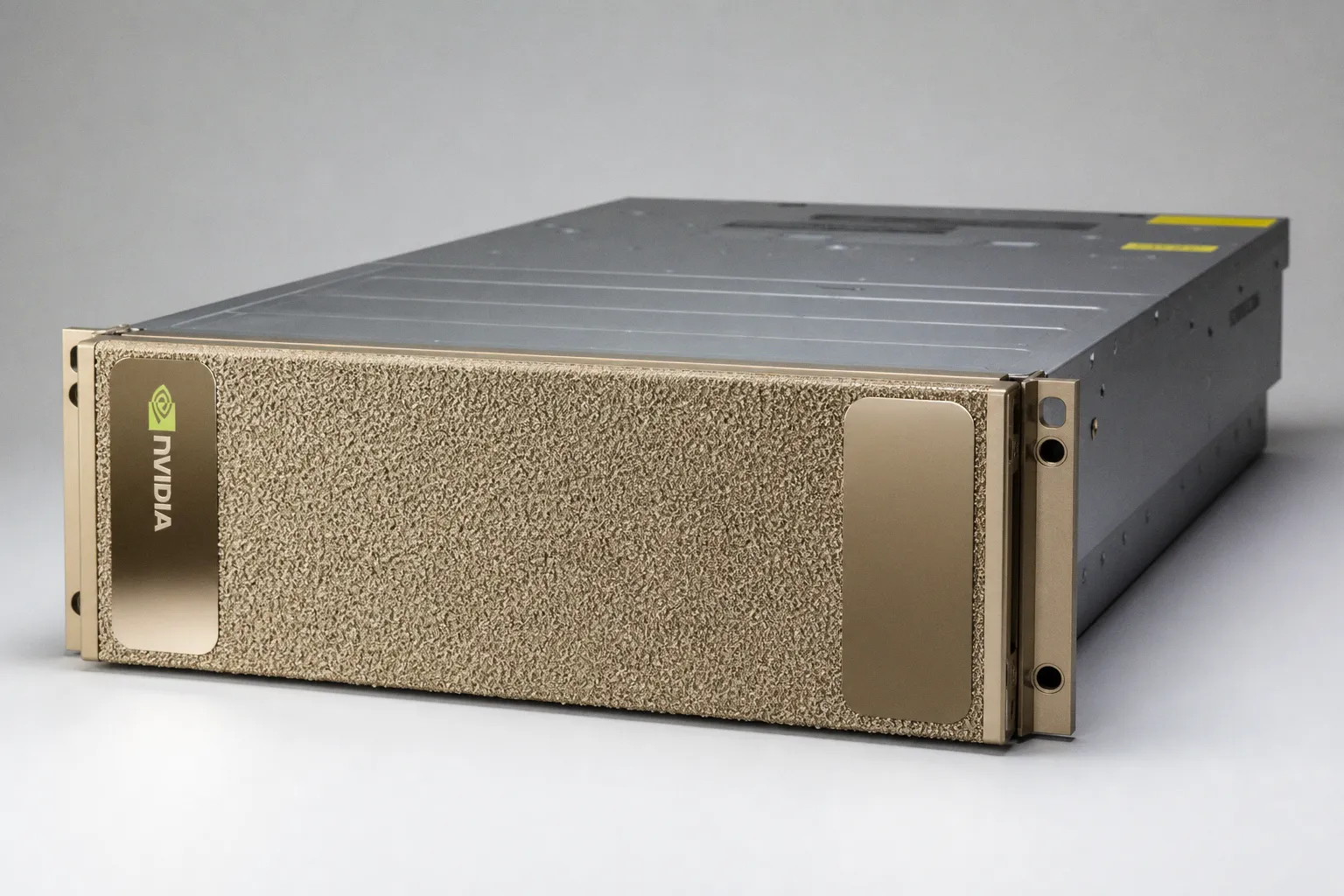
Infrastructure Strategies for Corporate LLM Deployment: Balancing Data Sovereignty and Scalability
This is the reality of enterprise AI deployment in 2025. The technology works. The business case is sound. But the infrastructure decision — on-premise hardware versus managed cloud APIs — is where most implementations stall, collapse, or quietly accumulate risk that nobody wants to talk about until it becomes an audit finding. The choice between air-gapped racks in your own data center and a polished managed endpoint is not a technical preference. It is a governance question with six-figure consequences, and getting it wrong does not show up on a dashboard. It shows up in a letter from a regulator.
---
The Sovereignty Spectrum: Air-Gapped Hardware vs. Managed API Latency
Let's start with what "on-premise" and "managed cloud" actually mean in practice, because the marketing language has muddied the water considerably.
An air-gapped on-premise deployment means you own the hardware — typically NVIDIA Blackwell B200 racks or comparable accelerator clusters — and run inference locally. Data never leaves your network perimeter. There is no API call to an external endpoint, no third-party logging, and no shared tenancy. You control the model weights, the inference pipeline, and every byte that flows through the system. The trade-off is capital expenditure, operational complexity, and the ongoing burden of keeping the stack patched and performant.
A managed cloud AI service — think Azure OpenAI, AWS Bedrock, or Google Vertex AI — offers a hosted model accessed through API calls. The vendor handles infrastructure, scaling, and model updates. Your data traverses their network, sits in their logs (however briefly), and lives under their security posture. The upside is speed to deployment and elastic scalability. The downside is a loss of granular control over data lifecycle.
Here is the catch: the gap between these two models is not as wide as vendor sales decks suggest, and the middle ground is where most enterprises actually land.
The infrastructure decision is not binary. It is a spectrum, and your position on it should be dictated by your compliance obligations — not by a vendor's feature comparison sheet.
In practice, the decision tree looks something like this. If your organization handles data subject to HIPAA, ITAR, GDPR with strict regional residency clauses, or sector-specific regulations like China's PIPL or the EU's AI Act provisions for high-risk systems, the calculus tilts heavily toward on-premise or, at minimum, a managed service with contractual guarantees of dedicated tenancy and regional data residency. If your data sensitivity is moderate and your compliance framework allows vendor-managed processing under standard contractual clauses, managed cloud can deliver faster time-to-value.
The problem is that most enterprises do not sit cleanly at either pole. They have some workloads that are deeply sensitive — legal review, patient data, financial forecasting with proprietary inputs — and others that are relatively low-risk, like internal knowledge retrieval or marketing copy generation. Forcing everything through the same infrastructure tier creates either unnecessary cost or unnecessary risk. This is why hybrid orchestration has become the dominant architecture pattern, though few organizations have implemented it well.
---
Infrastructure Economics: The Real Cost of Local LLM Deployment
Let's talk numbers, because this is where the conversation gets uncomfortable.
A single NVIDIA DGX B200 system — eight Blackwell B200 GPUs with 1.4 TB of unified memory — carries a list price north of $275,000 as of mid-2025. Deploying a production-grade inference cluster for a mid-size enterprise (supporting concurrent access for 500–2,000 users) typically requires two to four such nodes, plus networking, cooling, power distribution, and rack space. The all-in capital expenditure for a modest on-premise inference setup runs between $800,000 and $1.5 million before you hire the first MLOps engineer to keep it running.
By comparison, a managed cloud endpoint charging $0.003–$0.015 per thousand tokens for a frontier model offers no upfront cost. You pay as you go. At moderate usage volumes — say, 500 million tokens per month across an organization — monthly spend lands around $1,500 to $7,500. At that rate, the break-even point against on-premise hardware is measured in years, not months.
But here is what the spreadsheet does not capture: the cost of workflow friction.
When a managed API goes down, changes its rate limits, deprecates a model version, or updates its content filtering policies without notice, the downstream impact on enterprise workflows can be severe. I have seen departments lose access to a critical summarization tool for 48 hours because the provider pushed a breaking change to their API schema on a Friday afternoon. The direct cost was minimal. The indirect cost — missed deadlines, manual workarounds, eroded trust in the AI stack — was substantial and unmeasurable.
On-premise deployments eliminate that vendor dependency, but they introduce their own version of the same problem: hardware failure, driver incompatibilities, and the ongoing challenge of model updates. Running a 70-billion-parameter model locally requires not just the hardware, but a team that can handle quantization, fine-tuning, prompt engineering, and the constant vigilance required to keep inference latency within acceptable bounds.
Open-Source Observability: Closing the Monitoring Gap
One of the less-discussed advantages of on-premise deployment is the ability to implement full-stack tracing with open-source tools. Platforms like Langfuse, Helicone (self-hosted), and OpenTelemetry-based custom pipelines give enterprise teams granular visibility into every inference call — input tokens, output tokens, latency distributions, error rates, and cost attribution per department or use case.
Managed cloud providers offer their own dashboards, of course. Azure Monitor, CloudWatch, and GCP's operations suite all provide API-level telemetry. But the logging granularity varies, and — critically — the logs themselves reside on the provider's infrastructure. For compliance-sensitive environments, the question is not just "can I see my usage?" but "where does that usage metadata live, and who else can access it?"
The cheapest deployment model is the one that does not generate an audit finding. Price the infrastructure, but price the risk.
Open-source tracing on-premise solves this: you own the logs, you control retention, and you can feed them directly into your existing SIEM without a third-party data processing agreement. The trade-off is operational overhead — you need someone to deploy, maintain, and secure those tools. But for organizations already running on-premise inference, the marginal cost is small.
---
Navigating Compliance Frameworks: From HIPAA to Regional Data Residency
Compliance is not a checkbox. It is a moving target, and enterprise AI deployment has made it significantly more complex.
Take HIPAA. A healthcare organization deploying an LLM to assist with clinical documentation cannot send patient data to a third-party API without a Business Associate Agreement (BAA) that explicitly covers AI inference services. As of early 2025, only a handful of managed providers — Microsoft Azure OpenAI with HIPAA BAA coverage and Google Vertex AI under their healthcare-specific offering — have formalized BAA structures that regulators have not challenged. AWS Bedrock's HIPAA eligibility is documented, but the specifics of how prompt data is handled during inference remain a point of legal debate.
For organizations operating under GDPR, the challenge is different but equally acute. The EU's Article 44–49 data transfer provisions require that personal data processed outside the EEA receive "essentially equivalent" protection. A managed API with inference endpoints in the EU may comply on paper, but the question of whether prompt data is used for model improvement — and whether that constitutes "processing" under GDPR — is still being litigated in practice.
Here is a simplified view of how the major frameworks map to deployment decisions:
| Compliance Requirement | On-Premise Advantage | Managed Cloud Caveat |
|---|---|---|
| HIPAA BAA | Full control over PHI handling; no third-party BAA required | Requires signed BAA; verify inference data is not retained for training |
| GDPR Art. 44–49 | Data never leaves jurisdiction; no transfer mechanism needed | Must confirm regional endpoint residency and no cross-border replication |
| ITAR/EAR | Air-gapped deployment is the only practical path for controlled technical data | Managed services are generally not viable for ITAR-classified workloads |
| China PIPL | Data localization in-country; no cross-border transfer assessment required | Requires in-country data center presence and security assessment filing |
| EU AI Act (High-Risk) | Full audit trail and model documentation under your control | Vendor must provide technical documentation; verify availability |
The practical takeaway is straightforward: before you evaluate any infrastructure option, map your data flows against your specific regulatory obligations. Do not assume a vendor's compliance page covers your use case. Read the Data Processing Agreement. Ask where inference logs are stored. Ask whether prompt data feeds model training. And get the answers in writing.
This is not paranoia. It is due diligence. Just as a professional athlete's career depends on understanding their contract terms and medical protocols — something well-documented in profiles of top-tier competitors across sports — an enterprise's AI deployment depends on understanding the contractual and regulatory framework that governs data movement. The details matter more than the headline features.
---
Hardware Lifecycle Management: Integrating Blackwell B200 Racks into Private Data Centers
If your organization decides on-premise is the right path — or at least the right path for your sensitive workloads — the next question is not "which GPU?" It is "how do we operate this sustainably for the next five years?"
The NVIDIA Blackwell B200 represents the current state of the art for enterprise inference. Each GPU delivers up to 20 petaFLOPS of FP4 inference performance and 192 GB of HBM3e memory. A single DGX B200 node with eight GPUs offers 1.4 TB of unified memory, enough to serve a full-precision 70B-parameter model without quantization trade-offs. For many enterprises, this is the minimum viable unit for production inference at scale.
But owning hardware is not the same as operating it. Here are the operational realities that vendor briefings tend to gloss over:
1. Power and cooling infrastructure. A single DGX B200 node draws approximately 10–12 kW under load. A four-node cluster, including networking and storage, approaches 50 kW of continuous draw. Most enterprise data centers built before 2020 were not designed for this density per rack. Retrofitting power distribution and liquid cooling loops can add 20–30% to the total deployment cost.
2. Staffing. You need MLOps engineers who understand GPU scheduling, model serving frameworks (vLLM, TensorRT-LLM), and the quirks of large-scale inference — not just DevOps generalists. The talent market for this skill set is tight, and compensation reflects it. Budget for at least two dedicated engineers for a small deployment, scaling with cluster size.
3. Model update cadence. The LLM landscape moves fast. A model that is state-of-the-art today may be superseded in six months. On-premise deployments give you control over when and how you update, but that also means your team owns the testing, validation, and rollback process. There is no vendor to push a hotfix.
4. Failure modes. GPU failures in large clusters are not rare — they are expected. ECC memory errors, thermal throttling, and NVLink interconnect issues all occur in production. You need redundancy planning, health monitoring, and a spare parts strategy. Enterprise GPU supply chains have improved since 2023, but lead times for replacement B200 modules can still stretch to weeks.
5. Compliance and audit readiness. If your reason for going on-premise is data sovereignty, you need to prove it. That means documenting your data flow architecture, demonstrating that no inference data leaves the network perimeter, and maintaining audit trails that satisfy your legal team and external auditors. Tools like NVIDIA Morpheus and custom OpenTelemetry pipelines can help, but they require configuration and ongoing maintenance.
The lifecycle question is often overlooked in the initial procurement excitement. Organizations invest heavily in the hardware and under-invest in the operational layer that makes it reliable. This is where on-premise deployments quietly accumulate technical debt — not because the hardware fails, but because the human systems around it are under-resourced.
---
Hybrid Orchestration: Bridging Managed Cloud Efficiency with On-Premise Security Guardrails
The most successful enterprise AI deployments I have seen in the past eighteen months do not commit fully to either model. They build a hybrid orchestration layer that routes workloads based on data sensitivity, compliance requirements, and cost efficiency.
The architecture looks like this:
- Sensitive workloads (patient records, legal documents, proprietary financial data) run on-premise against locally hosted models. Data never leaves the network. Inference logs are captured locally and integrated into the organization's existing security monitoring stack.
- General-purpose workloads (internal knowledge retrieval, meeting summarization, code assistance, marketing content) route to managed cloud APIs. These workloads benefit from elastic scaling, latest-model access, and lower operational overhead.
- An orchestration layer — typically built on tools like LangChain, Semantic Kernel, or a custom routing service — classifies incoming requests by sensitivity tier and dispatches them accordingly. Classification can be rule-based (by user role, data source, or application context) or model-assisted (a lightweight classifier evaluates prompt content before routing).
This is not a trivial engineering project. The orchestration layer needs to handle failover (what happens when the on-premise cluster is at capacity?), logging unification (how do you aggregate telemetry from both environments into a single compliance dashboard?), and access control (how do you enforce that only authorized users can route to sensitive pipelines?). But the organizations that invest in this plumbing get the best of both worlds: the cost efficiency and agility of managed cloud, with the sovereignty and control of on-premise.
Here is a practical comparison of the three deployment models:
| Dimension | Full On-Premise | Full Managed Cloud | Hybrid Orchestration |
|---|---|---|---|
| Data sovereignty | Maximum — full control | Dependent on vendor agreements | Sensitive data on-premise; rest in cloud |
| Upfront cost | High ($800K–$2M+) | Low (pay-as-you-go) | Moderate (on-premise for subset of workloads) |
| Operational overhead | High — requires dedicated MLOps team | Low — vendor manages infrastructure | Moderate — orchestration adds complexity |
| Model freshness | Manual updates; slower cadence | Always latest available model | Tiered — latest models for general use, validated models for sensitive use |
| Scalability | Fixed capacity; scaling requires procurement | Elastic; scales on demand | Flexible — overflow to cloud during peak demand |
| Compliance posture | Strongest; auditable end-to-end | Requires DPA scrutiny; risk of data exposure | Strongest for sensitive data; cost-efficient for the rest |
The orchestration approach also solves a cultural problem that is easy to underestimate: change management. When you tell employees "all AI requests go through this one on-premise system," you create a bottleneck and a perception of restriction. When you tell them "your general tools work the same way, and the sensitive stuff is handled automatically in the background," adoption friction drops dramatically. The best infrastructure is the one users do not have to think about.
Build the routing logic around your data, not around your vendor's product roadmap.
---
The Implementation Checklist That Actually Matters
After walking through the infrastructure, economics, compliance, hardware, and orchestration dimensions, here is what I tell IT leaders who are facing this decision:
1. Start with your data classification. Before you evaluate a single vendor or spec a single server, map your data types against your regulatory obligations. Know exactly which data categories require which level of protection. This document becomes your infrastructure specification.
2. Run a proof-of-concept with real workloads. Not a demo. Not a benchmark. Take three actual business processes that would benefit from LLM integration and run them against both on-premise and managed endpoints. Measure latency, accuracy, user satisfaction, and — critically — the compliance implications of each path.
3. Price the total cost, including risk. The on-premise option looks expensive until you price in the cost of a data breach or a regulatory finding. The managed cloud option looks cheap until you price in vendor lock-in, unexpected rate limit changes, and the operational cost of managing a complex DPA. Build a five-year model that includes both capex/opex and risk-adjusted cost.
4. Invest in the orchestration layer early. Even if you start with a single deployment model, architect for hybrid from day one. The migration cost of bolting orchestration onto a monolithic deployment later is significantly higher than building it into the initial design.
5. Staff the operational layer, not just the project. The number one reason on-premise deployments underperform is under-staffing. The number one reason managed cloud deployments create compliance risk is under-monitoring. Budget for the people who keep the system running, not just the people who build it.
6. Establish a model governance process. Decide now who approves model updates, how validation is performed, and what rollback looks like. This process matters equally for on-premise model swaps and managed API version migrations. Without it, you are one breaking change away from a production incident.
---
Where This Lands
The on-premise versus managed cloud debate is not going away, and the answer is not going to get simpler. Regulatory frameworks are tightening. Model capabilities are expanding. Hardware costs are declining but not disappearing. And the organizational appetite for AI integration is growing faster than most IT teams can staff.
The enterprises that navigate this well will be the ones that treat infrastructure as a governance decision, not a procurement exercise. They will build hybrid systems that respect data sensitivity without sacrificing usability. They will invest in observability, compliance documentation, and the unglamorous operational plumbing that keeps the whole stack reliable. And they will make these decisions based on their actual data obligations and business workflows — not on vendor marketing, analyst quadrant positioning, or the assumption that the latest model justifies the latest infrastructure.
The Slack message that opened this piece? We resolved it in 72 hours. Not because we had the perfect architecture, but because we had already mapped our data flows, knew exactly which workloads were sensitive, and had a routing layer in place that could reroute the affected department's traffic to an on-premise fallback without changing their user experience. The compliance team got their audit-ready documentation. The employees kept working. And the vendor got a very specific set of questions about their data handling practices that they had never been asked before.
That is what good infrastructure strategy looks like in practice. Not a whitepaper. Not a benchmark. A set of decisions made in advance that hold up when the pressure arrives.