AI agents builder platforms: the road to autonomous workflows
The relevant benchmark for an AI agents builder in 2026 is no longer whether it can call an LLM and push a result into Slack. That was the lightweight automation phase.
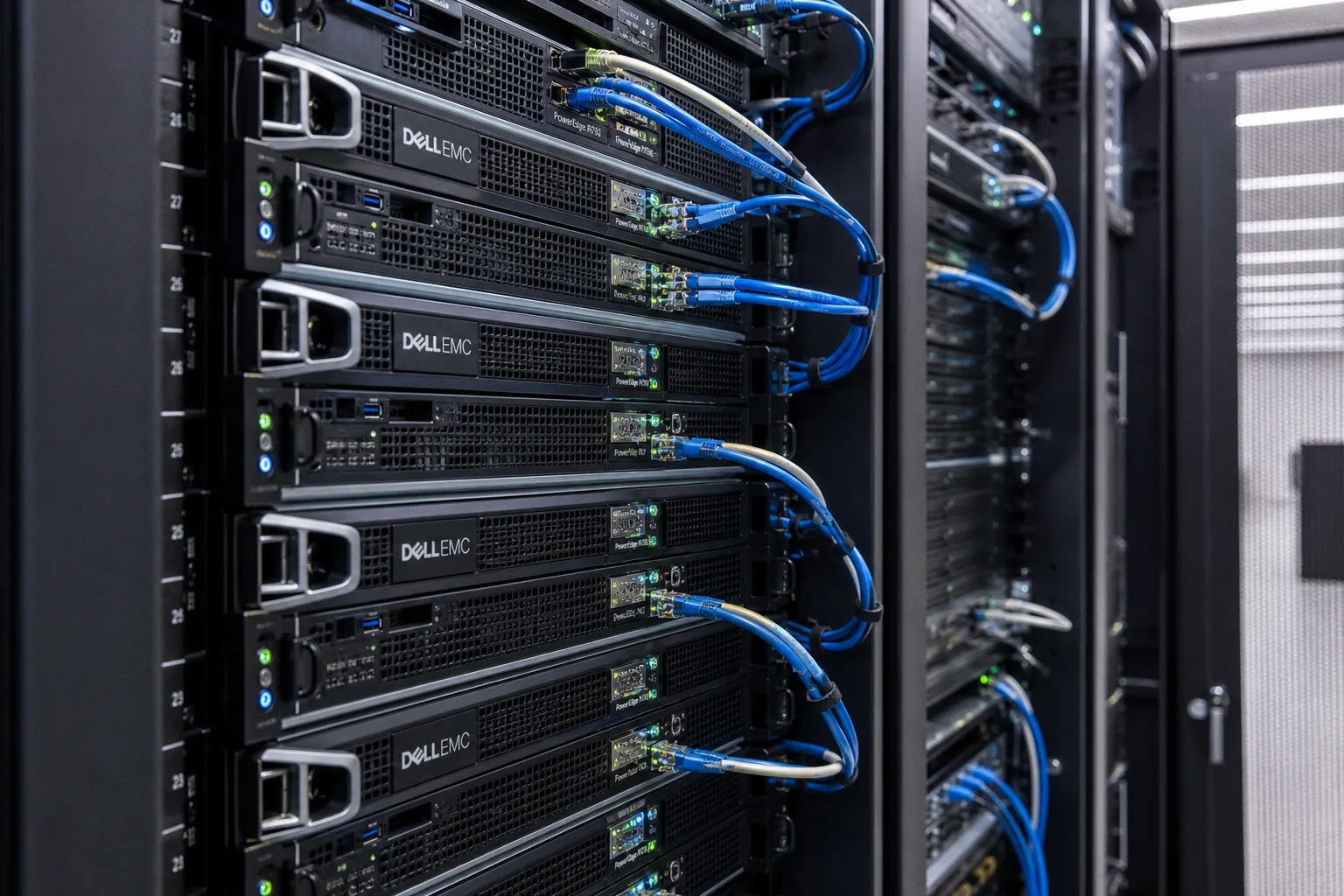
That architectural shift explains why the agentic AI development platform market is being valued less like a prompt-interface category and more like infrastructure software. The market is projected to move from $10.75 billion in 2025 to $14.62 billion in 2026, with forecasts pointing to $66.38 billion by 2031 at a 35.34% CAGR. The number is aggressive, but the underlying demand is legible: enterprises are not buying “agents” as mascots. They are buying orchestration engines, runtimes, policy layers, and LLM gateways that can sit between stochastic model output and deterministic business systems.
The shift from simple automation to orchestration engines
The first wave of agent builders borrowed heavily from workflow automation products: trigger, action, conditional branch, human approval, outbound API call. The difference was that an LLM could be inserted into the middle as a flexible parser, classifier, summarizer, or tool-selection mechanism. That design worked for narrow tasks because the operational graph remained shallow. The model produced an answer or selected one of a few tools; the workflow completed; state was discarded or written into a CRM, ticketing queue, spreadsheet, or internal database.
Autonomous workflows require a different control plane. Once a system can decompose a request, inspect intermediate output, call multiple tools, revise execution, and pass context between agents or subprocesses, the builder becomes closer to a distributed runtime than a graphical automation layer. The hard problems move toward scheduling, memory, traceability, permissions, and failure isolation.
The market composition already reflects this. Platform software accounted for 76.39% of agentic AI development platform revenue in 2025, a figure that indicates where enterprise budgets are concentrating. The spend is not primarily on decorative front ends or standalone assistants. It is on the layers that make agentic execution observable, governed, repeatable, and attachable to existing software estates.
The useful distinction is not “agent” versus “workflow.” It is where reasoning, routing, and execution boundaries are drawn:
| Layer | Earlier automation pattern | Agentic platform pattern |
|---|---|---|
| Trigger | Form submission, webhook, scheduled job | Event, user intent, document change, system anomaly, queue state |
| Decision logic | Static branch conditions | Model-assisted planning, policy-constrained routing, tool selection |
| State | Usually transient or stored in one SaaS object | Persistent context, execution traces, task memory, rollback metadata |
| Tool use | Fixed API calls | Dynamic tool invocation through registries and permission scopes |
| Governance | Role-based access and manual approval | Audit trails, model call logs, policy gates, human-in-the-loop checkpoints |
| Failure handling | Retry or stop | Retry, re-plan, escalate, isolate subtask, preserve trace integrity |
This is why the term “ai agents builder” is becoming imprecise. The best products in the category are not merely builders; they are execution environments for probabilistic software components. The builder surface is only the visible layer. Beneath it, the decisive parts are the runtime and the integration fabric.
The agent is the demo unit. The runtime is the product.
OpenAI’s launch of Agent Builder in late 2025 as part of the AgentKit framework is significant in this context not because it created the category, but because it moved the center of gravity toward first-party agent construction inside a model-provider ecosystem. Once the model vendor supplies the builder, the gateway, and the evaluation hooks, independent platforms have to defend their value at the orchestration, compliance, integration, and multi-model abstraction layers. That is where the category will be sorted.
Why BFSI is leading the autonomous charge
The banking, financial services, and insurance sector accounted for 71.68% of end-user revenue in the agentic AI development platform market in 2025. That concentration is unusually high, but it is not surprising at the rack-and-policy level. BFSI has the combination that makes agentic tooling valuable and difficult: high document volume, repetitive decision support, strict auditability, fragmented legacy systems, regulated customer communications, and expensive human review queues.
A mortgage file, claims packet, KYC refresh, trade surveillance alert, or policy servicing request is rarely a single API transaction. It is a bundle of unstructured documents, structured records, business rules, exception pathways, and escalation thresholds. Traditional robotic process automation was effective where the screen path was stable and the data format was predictable. It was brittle when a PDF layout changed, an email thread included contradictory attachments, or a case required cross-checking several internal systems.
Agentic workflow tools promise better tolerance for unstructured inputs, but they also introduce new risk surfaces. In BFSI, an agent cannot be allowed to improvise across permissions, fabricate a missing field, or silently choose a non-compliant communication path. The platform must bind the model to a constrained action set and capture enough telemetry to reconstruct why an execution path occurred.
The architecture tends to converge around several controls:
1. A model gateway that centralizes routing and logging. This allows the enterprise to swap or compare models, enforce data-handling policies, and record prompt-response pairs where retention rules permit. It also becomes the place where cost controls and latency budgets are enforced.
2. A tool registry with scoped permissions. An agent that can read a claims record should not automatically have write access to settlement systems. Tool invocation must be explicit, typed, logged, and bounded by role or workflow context.
3. A policy layer outside the prompt. Critical business rules cannot live only as natural-language instructions inside a system prompt. They need deterministic enforcement, especially around eligibility, disclosures, approval thresholds, and customer-facing outputs.
4. Human review at defined uncertainty points. The mature pattern is not full removal of human operators. It is selective insertion of human judgment where confidence, risk, or value justifies the latency.
5. Trace storage designed for audit rather than debugging alone. Developer traces show what failed. Compliance traces must show what happened, when, with which inputs, under which policy state, and with which user or service identity.
This is the reason enterprise demand maps directly onto orchestration engines and runtimes. A conversational interface without execution telemetry is operationally thin. A workflow engine without model-aware observability cannot explain agent behavior. A model API without a governance perimeter is not sufficient for regulated deployment.
North America’s 38.73% revenue share in 2025 also follows from this pattern. The region has deep SaaS penetration, hyperscaler availability, mature financial institutions with large automation budgets, and an enterprise procurement culture that can absorb platform-layer software if the governance case is credible. The question is less whether North America adopts agentic platforms and more which parts of the stack are captured by incumbent cloud, model, and enterprise software vendors versus specialist orchestration providers.
The developer divide: no-code builders versus Python-based frameworks
The category is splitting along a familiar axis: business-user composition versus developer-controlled execution. No-code AI agent builder products are optimized for speed of assembly, visual workflow design, and departmental deployment. Python-based frameworks are optimized for state control, testability, versioning, and integration with software engineering practices. Neither side eliminates the other because the boundary is not ideological; it is determined by workflow complexity and operational liability.
Taskade Genesis, CrewAI, and LangGraph illustrate the spread. Taskade Genesis is positioned around no-code orchestration, giving non-specialist teams a way to build agentic processes without writing Python. CrewAI is more naturally aligned with role-based crews in Python, where different agents are assigned responsibilities and coordinated inside developer-authored flows. LangGraph sits closer to state machine orchestration, a useful pattern when execution needs explicit transitions, persistent state, and controlled cycles rather than a loose chain of prompts.
The practical trade-off is not “easy” versus “hard.” It is how much of the execution semantics must be visible to the builder.
| Platform style | Typical strength | Typical constraint | Best-fit workload |
|---|---|---|---|
| No-code agent builder | Fast composition, business-user accessibility, low initial engineering overhead | Limited control over state, testing, custom evaluation, and deployment topology | Departmental workflows, internal assistants, lightweight document routing |
| Python role-based framework | Fine-grained agent design, code review, integration with CI/CD, custom tools | Requires engineering capacity and stronger runtime discipline | Research automation, technical operations, complex back-office flows |
| State machine orchestration | Explicit control over transitions, retries, memory, and loops | Higher design burden; less suitable for casual builders | Regulated workflows, long-running tasks, multi-step enterprise processes |
| Model-provider builder | Tight coupling to model APIs, faster access to first-party capabilities | Potential platform dependency and weaker multi-model abstraction | Teams standardized on one model ecosystem |
For developers, the core question is whether the agentic layer can be treated as software rather than configuration. Version control, test fixtures, regression evaluation, observability, and deployment promotion matter because agent behavior changes when prompts, tools, retrieval corpora, models, and policy rules change. A prompt update can be equivalent to a code change. A model upgrade can alter latency, token consumption, tool-calling patterns, and output distributions. Without evaluation harnesses, the platform becomes a low-friction way to ship silent regressions.
For business teams, the value of no-code systems is still material. Many useful workflows do not justify a full engineering project. A procurement intake assistant, meeting-to-task workflow, sales research agent, or internal policy Q&A tool can be assembled quickly if the integration catalog is broad enough and permissions are sensible. The risk begins when prototypes become production systems without ownership transfer, monitoring, or failure budgets.
No-code is a distribution mechanism; it is not a substitute for runtime discipline.
This divide will shape product launches through 2026. Vendors will market accessibility, but enterprise buyers will ask about deployment topology, logs, evaluation, model routing, data retention, and integration depth. The platforms that survive beyond early experimentation will have to serve both surfaces: a composable builder for adoption and a hardened execution layer for production.
Multi-agent systems are rising, but not yet dominant
Single-agent systems held 59.24% market share in 2025. That number is a useful corrective to the launch-cycle narrative around multi-agent collaboration. Multi-agent architectures are strategically important and likely to grow quickly, but they have not already displaced simpler single-agent deployments. Most organizations still begin with one agent wrapped around a bounded function because it is easier to evaluate, secure, and explain.
The appeal of multi-agent systems is straightforward. Complex work can be decomposed into specialized roles: one agent retrieves documents, another extracts entities, another checks policy, another drafts a response, another verifies output against constraints. In principle, this improves modularity. In practice, it also increases coordination overhead. Every additional agent adds message-passing cost, context-window pressure, latency, tool-permission complexity, and new failure modes.
At the infrastructure level, multi-agent execution behaves less like a chatbot and more like a small distributed system. The orchestration layer must answer questions that are familiar to backend engineers but relatively new to many AI product teams:
- Which agent owns the authoritative state for a task?
- Can two agents write to the same object, and if so, how are conflicts resolved?
- Are intermediate outputs stored, summarized, embedded, or discarded?
- What is the maximum loop depth before escalation?
- Which model is assigned to which agent, and is routing static or cost-aware?
- How are tool calls serialized when downstream systems have rate limits?
- What happens when one agent produces valid syntax but invalid business content?
The latency profile is also different. A single-agent workflow may require one or several model calls. A multi-agent workflow can multiply calls across planning, execution, critique, and revision phases. Even if individual calls are fast, aggregate latency can exceed interactive thresholds. Token cost compounds in the same way. Context passed between agents is not free; it consumes input tokens, memory bandwidth inside inference infrastructure, and sometimes retrieval calls into vector or search systems.
This is where quantization, model selection, and gateway routing become economic variables rather than backend trivia. A platform that routes every subtask to a frontier model may look better in a demo and worse in a finance review. Smaller models, distilled models, or quantized deployments can be sufficient for classification, extraction, formatting, or policy checks, while larger models are reserved for ambiguous synthesis or planning. The agent builder that exposes this routing cleanly gives developers more than a UI advantage; it gives them a cost surface they can optimize.
The same applies to parameter count and memory bandwidth. Larger models can improve performance on complex reasoning and generation tasks, but inference throughput is constrained by hardware, batching strategy, context length, and memory movement. Enterprise platforms abstract this away for business users, but developers still feel the result as latency variance, queueing, and cost per execution. Autonomous workflows will not scale on slogans. They will scale on careful allocation of model capacity across the graph.
Product launches are moving toward agent operating layers
The most important product launches in this space increasingly look like layers rather than point tools. A modern autonomous agent development platform is expected to include at least some combination of builder UI, runtime, model gateway, tool registry, memory layer, evaluation system, deployment controls, and observability. The more ambitious platforms are trying to become the control plane through which enterprises define how model-driven work is executed.
That packaging shift creates pressure on several incumbent categories. RPA vendors have process integration and enterprise relationships but must adapt to model-driven ambiguity. iPaaS vendors have connectors and workflow primitives but may lack deep agent state and evaluation semantics. Model providers have native inference and tool-calling advantages but may be seen as too vertically integrated for buyers that want model portability. Devtool frameworks have flexibility but need enterprise-grade management features to compete for platform budgets.
A credible ai agents builder in 2026 therefore has to answer both product and infrastructure questions. The product team wants to know whether a workflow can be assembled quickly. The platform engineering team wants to know where it runs, how secrets are managed, how logs are exported, how environments are separated, how prompts are versioned, and whether failures can be replayed. The security team wants identity propagation, least-privilege tool access, data boundaries, and reviewable traces. The finance team wants unit economics.
The strongest launches are likely to converge around five capabilities:
1. Composable orchestration with explicit state. Visual canvases are useful, but long-running workflows need durable state, typed transitions, and recovery logic. A platform that cannot show state cleanly will struggle in regulated or high-value processes.
2. Multi-model routing by policy and workload. Enterprises will not want every task bound permanently to one model. Routing by latency, cost, data sensitivity, or task type will become part of the platform’s control surface.
3. Evaluation built into the lifecycle. Agent outputs require regression tests, scenario suites, tool-call validation, and production monitoring. Evaluation cannot remain an external spreadsheet exercise.
4. Secure tool invocation. The tool layer is where model output becomes business action. This is the boundary where permissioning, audit, schema validation, and rate limiting must be enforced.
5. Human-in-the-loop controls that are precise rather than decorative. Approval steps need to be placed at risk-bearing points, not appended everywhere as a liability disclaimer. Excessive review destroys the economic case; insufficient review destroys trust.
These features are less glamorous than a demo in which agents negotiate tasks among themselves. They are also the difference between a pilot and a deployed workflow. The industry has already seen enough prompt wrappers. The next phase is execution infrastructure.
The road to autonomous workflows is narrower than the market narrative
The $66.38 billion forecast for 2031 assumes that agentic platforms move from experimentation into production budgets. That is plausible, but not automatic. The category must solve a set of constraints that are not marketing problems: auditability, deterministic policy enforcement, model drift, cost predictability, latency control, and integration with legacy systems that were never designed for probabilistic callers.
Single-agent systems will remain important because they are often the correct engineering choice. Multi-agent systems will grow where decomposition improves reliability or throughput, but they will not be justified for every workflow. No-code builders will expand access, but code-based frameworks will remain necessary where state, testing, and deployment guarantees matter. Model-provider tools will accelerate adoption, but independent orchestration layers will compete on portability, governance, and enterprise integration.
For developers, the implication is immediate. Agentic workflows should be designed like production systems: define the state model, constrain tool access, measure latency, log execution, test prompts and policies together, and assign cheaper models to cheaper subtasks where quality allows. FLOPs consumed without control do not become autonomy; they become an unpredictable operating expense.
For buyers, the useful question is not which vendor has the most fluent demo agent. It is which platform can make model-driven execution boring enough to run inside a bank, insurer, software company, or operations center without constant human babysitting. That is the actual road to autonomous workflows: less spectacle at the interface, more discipline in the runtime.