HPE Updates Hardware, Private Cloud And Networking For Agentic AI Era
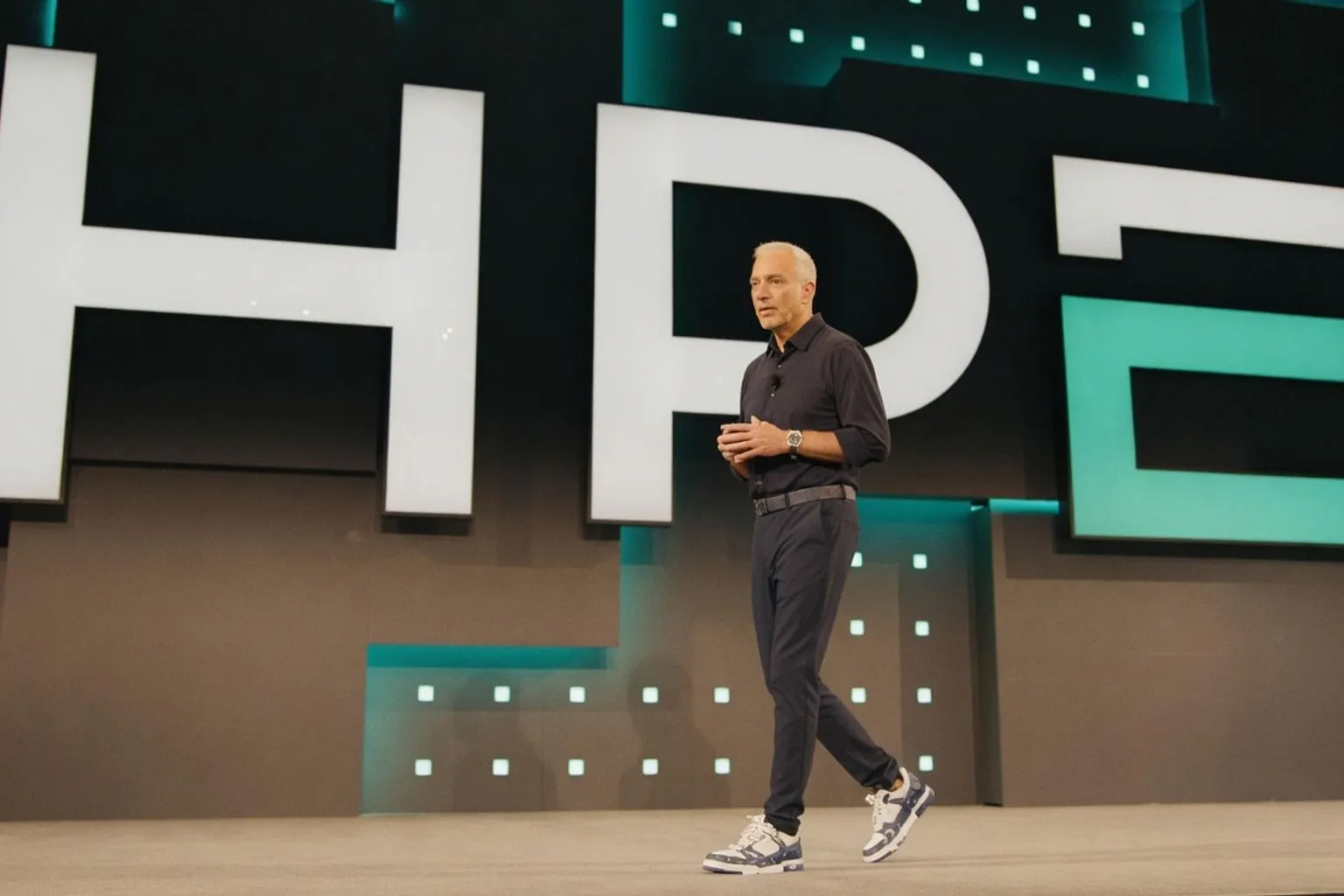
Hewlett Packard Enterprise used its Discover 2026 stage to make a calculated bet: that the next wave of enterprise AI spending will not flow to the hyperscalers alone.
The Commercial Logic
Roughly 35–50% of enterprise workloads have migrated to public cloud over the past fifteen years, by various industry estimates. The rest stayed put — pinned there by cost, data sensitivity, and sovereignty rules. HPE is now betting the same gravity will hold for AI. Cost discipline has become the talking point: AI token consumption has ballooned in many enterprises under policies that rewarded usage over outcomes, and CFOs are pushing back. A pre-validated, on-prem reference architecture lands directly in that procurement lane. DISA, Germany's HLRS, and St. Jude Children's Research Hospital are already cited as adopters, giving HPE credible reference customers without the usual glossy enterprise filler.
Why It Matters For The Stack
The agentic AI governance pitch — execution control, auditability, air-gapping — is structurally an enterprise sale, not a developer sale. Multi-year contracts, sticky refresh cycles, and bundling leverage on storage and networking. For HPE, the upside is real but modest: this is a slow-burn services-plus-hardware annuity, not a breakout quarter. The sobering reality is that sovereign AI remains a niche within a niche — most regulated buyers will still rent capacity from AWS, Azure, or Google when workloads permit, and only the most sensitive 10–20% of compute will ever justify the capex of a dedicated factory. HPE's revenue mix will not look fundamentally different twelve months from now.
What To Watch
The metric that actually matters is the attach rate of private cloud software to HPE hardware refresh cycles. If the Sovereign AI Factory pulls through more than bare-metal shipments, the story is a margin story. If it remains a slide-deck reference design that consultants cite in pilots, it is another infrastructure pivot that quietly disappoints. The capital cycle for on-prem AI is real — but it is a fraction of the cloud-AI capex narrative, and HPE knows it.