Choose the Best Open Source LLM for Secure Deployments
The first enterprise question about a large language model is rarely “Which one writes the best poem?” It is usually something more prosaic: can legal, finance, engineering, and customer operations…
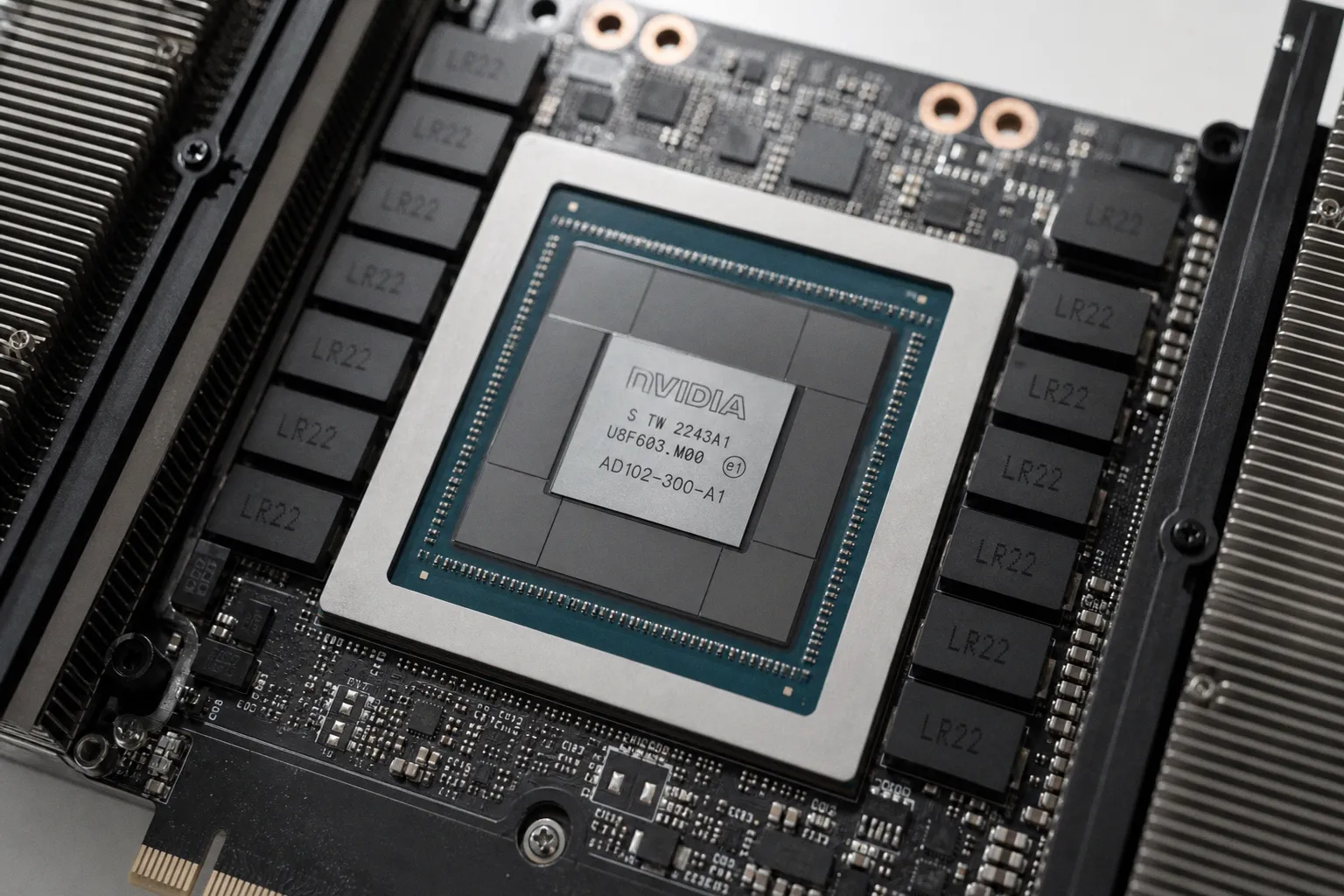
The first enterprise question about a large language model is rarely “Which one writes the best poem?” It is usually something more prosaic: can legal, finance, engineering, and customer operations use it without sending sensitive data into a system the company does not control? That is where the search for the best open source LLM becomes less about leaderboard pride and more about risk, infrastructure, and change management.
Here is the catch: many of the strongest models available for local deployment are better described as open-weights models, not open source in the strict OSI sense. Their weights may be downloadable, their architectures may be documented, and commercial use may be allowed, but the license terms, training data transparency, and redistribution rights vary sharply. For a secure enterprise deployment, that distinction is not academic. It affects procurement, compliance review, vendor risk, and the ability to run the model in an air-gapped environment without creating a governance problem later.
Architectural transparency and the open-weights landscape
The enterprise attraction of open-weights models is straightforward. A company can host the model on its own infrastructure, route prompts through internal controls, log usage according to policy, and keep proprietary data away from external APIs. In practice, that can reduce data exposure and give security teams a clearer inspection surface than a black-box service.
But “local” does not automatically mean “safe.” The model is only one component. The inference engine, container image, orchestration layer, prompt logging, retrieval system, access controls, and data retention rules all carry risk. A locally hosted model connected casually to internal documents can leak more sensitive information to the wrong employee than a tightly governed external service.
For IT leaders, the architectural question should be framed around operating model, not just model weights:
- Can the model run inside the company’s approved compute boundary? That may mean a private cloud region, an on-premise GPU cluster, or a genuinely air-gapped environment for regulated teams.
- Can the deployment be inspected and patched? Security depends heavily on the inference stack, not just the model file.
- Can the company enforce data handling rules? Prompt storage, document retrieval, redaction, and role-based access matter as much as token throughput.
- Can business units actually use it? A model that is theoretically secure but too slow, too expensive, or too brittle will create workflow friction and shadow AI behavior.
That last point is often underweighted. Employees do not bypass approved tools because they love violating policy. They bypass them because the approved tool adds six steps to a task they must finish by Friday. A secure LLM rollout has to meet the workflow where the work already happens.
The safest model is not the one locked in a lab. It is the one employees can use without inventing workarounds.
The current open-weights market gives enterprises a more serious set of choices than it did even a year ago. Meta’s Llama 3.1 family, Google’s Gemma 2, and Mistral NeMo each bring a different operating profile. They are not interchangeable, and the best open source LLM for one company’s secure deployment may be the wrong fit for another’s hardware, license posture, or user base.
Llama 3.1, Gemma 2, and Mistral NeMo: what changes on-premise
For secure deployments, model selection starts with a map of constraints. How sensitive is the data? How many users need access? Is the primary workload code generation, summarization, policy search, customer support drafting, contract review, or internal analytics? Will the model be used with retrieval-augmented generation, or is it expected to rely mainly on its internal knowledge?
The practical comparison looks different from a public demo.
| Model family | Relevant variants | Deployment profile | Strengths for enterprise use | Watch points |
|---|---|---|---|---|
| Llama 3.1 | 8B, 70B, 405B | Broad range from efficient internal assistants to high-capacity systems | Strong open-weights ecosystem, 128k token context window, commercial use under Llama 3.1 Community License | License restrictions for companies with over 700 million monthly active users; 405B demands serious infrastructure |
| Gemma 2 | 9B, 27B | Smaller-to-mid-size deployments where efficiency matters | Distillation from larger models helps smaller variants perform strongly for their size | Google license and usage terms require careful review; not a universal replacement for larger models |
| Mistral NeMo | 12B | Designed to fit into a single consumer GPU class of deployment | Collaboration between Mistral AI and NVIDIA; strong size-to-performance profile | Smaller model may need task-specific tuning or RAG to handle complex enterprise reasoning |
Llama 3.1, released in July 2024, is the family most likely to dominate enterprise shortlists because it spans such a wide range. The 8B model can support lower-cost internal experimentation. The 70B model is more plausible for higher-quality departmental assistants. The 405B model is a major research and capability milestone, but it is not a casual on-premise install. Running it responsibly requires a mature infrastructure conversation, not a weekend proof of concept.
The 128k token context window in Llama 3.1 is operationally meaningful. Long context can help with legal review, technical documentation, and multi-document synthesis. But it also creates a governance issue: long prompts often contain more sensitive information. If an employee pastes a contract, a customer history, and internal notes into one prompt, the context window has become a data concentration point. That does not make the model unsafe. It means controls around retrieval, masking, and logging need to be designed before launch.
Gemma 2, released by Google in June 2024, deserves attention because of its efficiency story. Its 9B and 27B variants use distillation, where larger models help train smaller ones. For enterprises, that can translate into better performance within a smaller hardware envelope. In practice, that matters for teams that do not have the budget or political clearance for a large GPU program but still need a local model that is more capable than a toy assistant.
Mistral NeMo, released in July 2024 through a collaboration between Mistral AI and NVIDIA, sits in a particularly useful middle zone. At 12B parameters, it is designed to fit into a single consumer GPU while outperforming previous models of similar size on benchmarks such as MMLU. That makes it interesting for edge cases: secure workstations, departmental pilots, and environments where a central GPU cluster is unavailable or slow to procure.
The temptation is to ask which one is “best.” A better enterprise question is: which model produces acceptable output at an acceptable cost under your compliance model?
Secure deployment is a workflow decision, not just a model download
A secure LLM program usually fails in one of two ways. Either the technology team over-optimizes for model quality and underestimates governance, or governance teams over-rotate on restriction and produce a tool nobody wants to use. Both outcomes damage ROI.
In a real corporate deployment, the model has to sit inside an operating system of people and policies. That includes:
1. Identity and access management. The model should know who is asking only in the sense required to enforce permissions. If retrieval is connected to internal files, the assistant must not surface documents the employee cannot already access.
2. Prompt and output logging. Security teams often want detailed logs; privacy teams often want minimization. The compromise is usually tiered retention, redaction of sensitive fields, and separate handling for regulated departments.
3. Data loss prevention. If employees can paste source code, personal data, financial forecasts, or customer records into the model, DLP controls need to operate at the prompt layer, not only at the network perimeter.
4. Retrieval boundaries. RAG can improve accuracy, but it can also turn a language model into a fast path across corporate silos. That is valuable when governed and dangerous when improvised.
5. Human review for high-impact work. Contract language, compliance analysis, customer commitments, and code changes should not move directly from model output to production without review.
This is where local deployment earns its keep. Running a model inside the company boundary gives the organization more options for logging, filtering, and isolating workloads. An air-gapped deployment can be appropriate for defense, critical infrastructure, sensitive research, or high-risk M&A activity. But air-gapping also raises the operational burden: updates are harder, monitoring is more constrained, and model evaluation must be handled internally.
There is a familiar analogy from corporate asset management. Companies that treat digital assets casually often discover ownership and governance problems only during a transaction; the same discipline that applies to areas such as buying and managing aged domains is increasingly relevant to AI infrastructure, where provenance, control, and renewal of rights are not side details. Model governance is not glamorous, but it is where many enterprise AI programs either become durable or stall.
Quantization and air-gapped environments: where theory meets hardware
Quantization is one of the practical reasons open-weights models are moving from research interest to enterprise deployment. By representing model weights in lower precision, teams can reduce memory requirements and run models on more modest hardware. Formats such as GGUF and EXL2 are commonly used to make local inference more feasible.
For a secure deployment, quantization is not just a cost trick. It can determine whether a model can be placed close to sensitive users without sending data to a centralized service. A smaller quantized model may run inside a controlled workstation, secure lab, or isolated server where network access is limited.
The trade-off is quality. Quantization can preserve much of a model’s usefulness, but aggressive compression may degrade reasoning, instruction following, coding performance, or consistency. That degradation is not always obvious in a short demo. It often appears in edge cases: a compliance answer that misses a qualifying clause, a code suggestion that almost compiles, or a summary that quietly drops an exception.
In practice, teams should test quantized versions against the actual tasks they plan to support. A 4-bit quantized model may be adequate for internal knowledge base search and first-draft summaries. It may be less suitable for complex legal analysis or multi-step software debugging. A larger model running at lower precision may outperform a smaller model in some workflows, while consuming similar infrastructure. There is no universal answer because latency, cost, and accuracy vary widely by GPU and CPU setup.
Model collapse and data leakage risks also need sober handling. Model collapse is generally discussed in the context of models trained repeatedly on synthetic or degraded data, but enterprises should treat quality drift as a governance concern more broadly. If a company fine-tunes a model on poor internal outputs, stale documentation, or unreviewed synthetic content, it can degrade the model’s usefulness. Data leakage, meanwhile, is shaped by the full deployment: fine-tuning data, retrieval sources, logs, user permissions, and inference tooling.
Quantization can lower the hardware bill. It does not lower the need for evaluation.
Air-gapped deployments make this evaluation harder but more necessary. Without live vendor telemetry or easy cloud monitoring, the enterprise has to build its own measurement loop. That includes offline test sets, red-team prompts, regression tests after model updates, and documented acceptance thresholds for each department.
Benchmarks help, but they do not close the procurement file
The Open LLM Leaderboard by Hugging Face has become an industry reference point for comparing open models. It tracks metrics such as MMLU-Pro, GPQA, and MuSR, among others. These benchmarks are useful because they give teams a common language for capability. They are not enough to make a deployment decision.
MMLU-style benchmarks can indicate broad knowledge and reasoning. HumanEval is commonly used for coding ability. GPQA can signal performance on difficult expert-level questions. MuSR tests multi-step reasoning. These scores help narrow a shortlist, especially when procurement committees need a defensible basis for comparison.
But enterprise reliability lives in the gap between benchmark and workflow.
A customer support team may care less about advanced reasoning and more about tone control, policy adherence, and refusal behavior. A software team may care about HumanEval-like coding capability but still need the model to understand the company’s internal libraries. A compliance team may prefer a model that answers more cautiously and cites retrieved policy text rather than one that sounds fluent and overconfident.
A useful internal evaluation set should include:
- Representative prompts from real work, sanitized where necessary, not invented examples that flatter the model.
- Failure cases from current processes, such as missed contract clauses, ambiguous tickets, or recurring engineering errors.
- Department-specific scoring rubrics, because legal, HR, finance, and engineering do not define “good answer” the same way.
- Latency thresholds, since a technically accurate model that takes too long will not survive daily operations.
- Security and refusal tests, including attempts to retrieve unauthorized information or override system instructions.
The ROI calculation should also include the cost of human review. If a model saves ten minutes in drafting but adds twelve minutes of verification, the business case is weak. If it cuts a two-hour document search to fifteen minutes while keeping a human approver in the loop, the case becomes much stronger.
This is the point where the “best open source LLM” label becomes too blunt. The best model for a secure coding assistant may not be the best model for policy search. The best model for an air-gapped research lab may not be the best model for a sales operations copilot. The enterprise shortlist should be segmented by workload, not unified around one winner for political convenience.
Licensing and compliance: the quiet blocker
Licensing is where many open-weights projects meet corporate reality. Apache 2.0 and MIT licenses are generally easier for enterprises to process because they are familiar and permissive. Custom community licenses can still allow commercial use, but legal teams need to read the details.
Llama 3.1 is released under the Llama 3.1 Community License, which allows commercial use with specific restrictions, including conditions for companies with more than 700 million monthly active users. For most enterprises, that may not be a blocker. For very large platforms, it is not a footnote.
Gemma 2 and Mistral NeMo also require license review in context. The issue is not only “Can we use this model?” It is also:
- Can we modify it?
- Can we redistribute a derivative?
- Can we use outputs in commercial workflows?
- Are there attribution or acceptable-use obligations?
- Are there restrictions that conflict with customer contracts?
- Can we support the model over a multi-year product lifecycle?
Compliance teams should be brought in early, not after a pilot becomes popular. Otherwise, a department may build a workflow around a model that legal later restricts. That creates change management pain: employees lose a useful tool, IT loses credibility, and leadership becomes more cautious about the next AI project.
Data privacy adds another layer. Local hosting can support privacy goals, but it does not solve them automatically. If the model is connected to personal data, employee records, health information, financial data, or customer communications, the organization still needs policies for purpose limitation, access control, deletion, auditability, and incident response.
A secure deployment should therefore have a simple internal ownership map. Security owns threat modeling. Legal owns license interpretation. Privacy owns data handling constraints. IT owns infrastructure and access. Business units own use-case validation. Without that map, the model becomes everybody’s project and nobody’s responsibility.
A practical selection path for IT and business leaders
A disciplined enterprise selection process does not need to be slow, but it does need to be staged. The mistake is to start by installing three models and letting the loudest department declare a winner. That creates anecdotal decision-making and usually favors whichever model produces the most impressive demo.
A better path looks like this:
1. Define the deployment boundary first. Decide whether the workload requires air-gapping, private cloud, on-premise hosting, or a hybrid setup. This immediately narrows the hardware and model options.
2. Classify the workload. Summarization, code assistance, policy retrieval, customer response drafting, and analytical reasoning are different jobs. Do not use a single benchmark score as a proxy for all of them.
3. Shortlist by license and infrastructure fit. Remove models that legal cannot approve or infrastructure cannot support. This is less exciting than a leaderboard review, but it prevents wasted pilots.
4. Test base and quantized versions. Compare quality, latency, and cost on actual internal tasks. Include GGUF or EXL2 variants where hardware constraints are real.
5. Evaluate with business users and control owners together. A model that delights users but worries compliance is not ready. A model that satisfies compliance but frustrates users will not be adopted.
6. Launch with measured scope. Start with a department or workflow where the value is visible and the risk is bounded. Expand after evaluation, not before.
For many organizations, Llama 3.1 70B will be the serious quality candidate if infrastructure is available. Llama 3.1 8B, Gemma 2 9B, and Mistral NeMo 12B may be more practical where cost, latency, and local hardware are the main constraints. Gemma 2 27B can sit in the middle for teams looking for stronger performance without moving into the largest model class. Llama 3.1 405B is strategically important, but its role in secure enterprise deployment is more likely to be selective unless the company already has substantial AI infrastructure.
The right answer may also be plural. Enterprises often need a model portfolio: a smaller model for high-volume internal assistance, a stronger model for complex analysis, and a tightly controlled environment for sensitive workloads. Standardizing on one model can simplify governance, but it can also force bad trade-offs across departments.
The real decision: capability under control
The best open source LLM for secure enterprise deployment is not simply the model with the highest public score. It is the model that fits the organization’s risk boundary, hardware reality, license posture, and employee workflow.
Llama 3.1 brings scale, ecosystem depth, and a broad set of deployment options. Gemma 2 offers an efficient performance story shaped by distillation. Mistral NeMo makes a compelling case for smaller, practical deployments that still need serious capability. None should be treated as automatically secure. None should be treated as universally best.
For IT leaders, the actionable takeaway is to make the selection process operational from the start. Define the data boundary. Read the license before the pilot. Test quantized versions against real work. Measure latency and review burden, not just benchmark scores. Put compliance, privacy, security, and business users in the same room early enough that their constraints shape the architecture.
That is how secure LLM deployment moves from an impressive lab asset to a durable corporate tool. The model matters. The operating discipline around it matters more.