Evaluate Llama 3.1 70B versus Qwen 2.5 72B for coding tasks
The decision to migrate a development stack from proprietary APIs to open-weights models is rarely driven by a single factor.
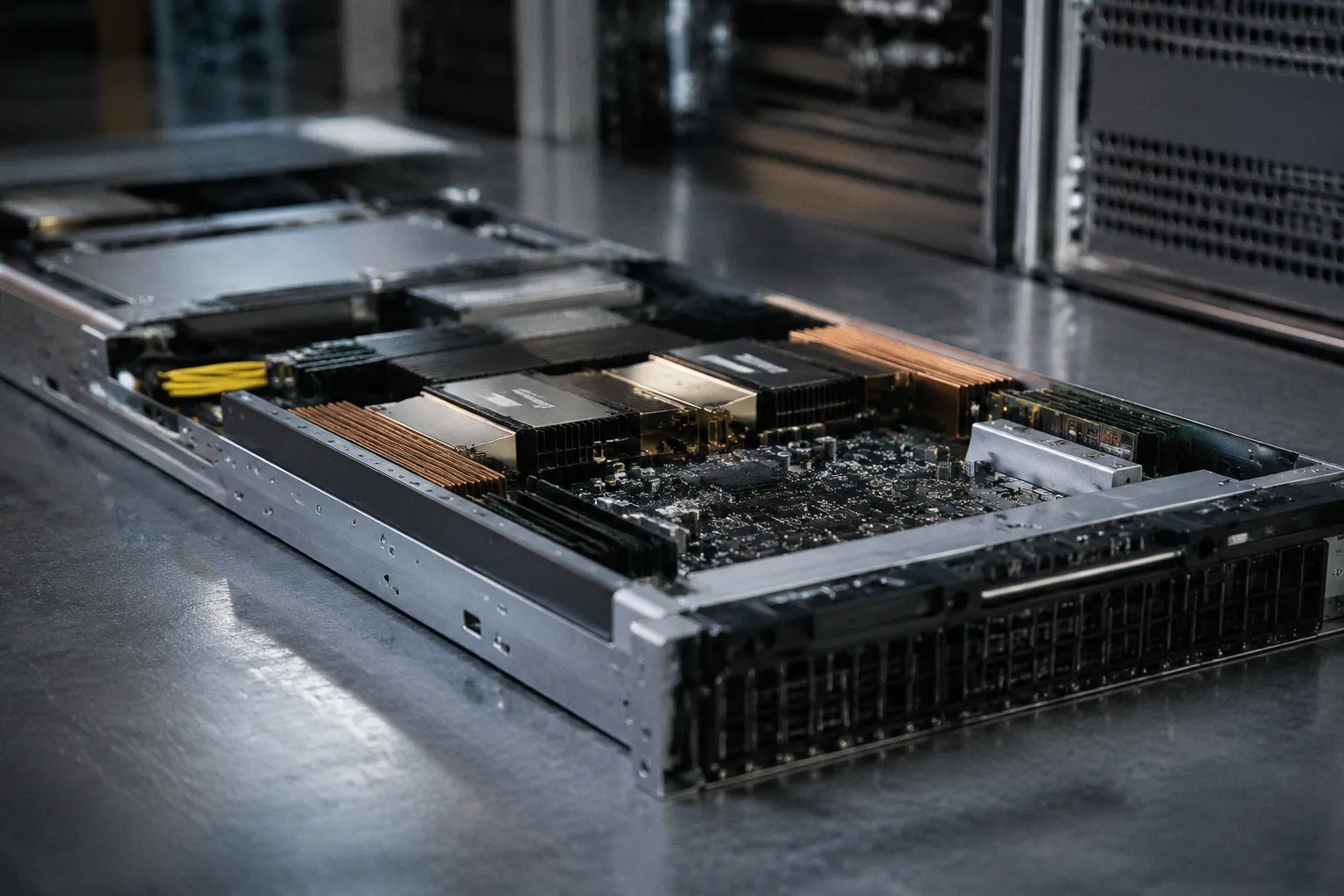
Choosing between Meta’s Llama 3.1 70B and Alibaba’s Qwen 2.5 72B is not a matter of crowning an absolute victor. It demands a granular examination of how these models perform under the specific pressures of your organization’s programming languages, codebase architecture, and operational constraints. Parameter counts are merely the starting point of the story.
Architectural Foundations and Training Scale
To predict how these models behave under pressure, we must first inspect the bedrock of their training. Meta released Llama 3.1 70B in July 2024, employing a dense Transformer architecture trained on a colossal dataset exceeding 15 trillion tokens. This vast corpus endows Llama 3.1 with a remarkably robust foundation for general-purpose instruction following and multilingual tasks. If your developers frequently require a model to explain complex architectural patterns, translate code between legacy systems and modern languages, or generate comprehensive documentation, Llama's broad training base delivers tangible workflow benefits.
Qwen 2.5 72B, released by the Qwen team in September 2024, shares the dense Transformer architectural lineage but is fine-tuned with a heavy emphasis on coding and mathematical reasoning. While the exact composition of its training data remains proprietary, the model's performance reveals a deliberate focus on logical deduction and syntactic precision. Both models offer a 128K token context window—a substantial upgrade from earlier generations and a critical feature for processing large codebases without fragmentation.
From a strategic perspective, the open-weights nature of both models offers a path away from vendor lock-in. However, implementation logistics differ. Meta’s license for Llama 3.1 is notably permissive for commercial use up to a certain scale, while Qwen’s licensing terms warrant careful review by compliance teams, especially regarding deployment region and fine-tuning intentions.
Decoding the HumanEval Performance Gap
Public benchmarks provide a first data point, but their practical value demands careful interpretation. The HumanEval benchmark, which tests a model's ability to generate functional Python code from docstrings, shows a clear, though nuanced, lead for one contender:
* Qwen 2.5 72B HumanEval Score: 87.3
* Llama 3.1 70B HumanEval Score: 83.5
The critical caveat: a 3.8-point advantage on HumanEval does not equate to a 3.8% productivity increase in a real engineering department. HumanEval comprises isolated, single-function Python problems. In practice, developers navigate intricate legacy systems, interact with proprietary internal APIs, and refactor code across multi-file structures—scenarios where isolated benchmark performance offers limited guidance.
A benchmark score is a sterile laboratory result. The true test is how an LLM navigates the tangled, interdependent realities of a production codebase.
For a meaningful evaluation, organizations must design internal benchmarks using their own proprietary code snippets. This reveals how each model handles specific design patterns, internal libraries, and the idiosyncratic "style" of your codebase, moving beyond the sanitized environment of academic datasets.
| Parameter / Feature | Llama 3.1 70B | Qwen 2.5 72B |
|---|---|---|
| Developer / Publisher | Meta AI | Alibaba / Qwen Team |
| Release Date | July 2024 | September 2024 |
| Parameter Count | 70 Billion | 72 Billion |
| Context Window | 128K tokens | 128K tokens |
| HumanEval Score | 83.5 | 87.3 |
| Primary Strength | Broad instruction following, multilingual support | Specialized code generation, mathematical/logical rigor |
Language-Specific Proficiency in C++, Java, and Python
Modern engineering departments are often polyglot. Backend services might run on Java, data pipelines on Python, and performance-critical modules in C++ or Rust. The ideal model must demonstrate competence across this spectrum, but rarely with equal proficiency.
Qwen 2.5 72B exhibits superior performance in specialized programming languages. The Qwen team intentionally emphasized multi-language code repositories during training, yielding a model with a keen grasp of syntax and structure in strongly-typed languages like Java and C++. It tends to produce code that is not just functionally correct but also adheres more closely to language-specific conventions and best practices.
Llama 3.1 70B, conversely, excels as a versatile assistant. Its strength lies in understanding and executing a broader range of instructions. If a developer's need is to explain a complex system design, refactor a piece of code while maintaining detailed comments, or generate usage documentation, Llama’s general-purpose capabilities often streamline the interaction. The cost-performance calculation becomes nuanced. Optimizing your compute stack requires a clear-eyed assessment of which model delivers the highest utility for your most common tasks, rather than pursuing the highest benchmark score in isolation.
Context Window Management and Long-Range Reasoning
A 128K token context window is a powerful tool, but raw capacity is less important than effective management. The true test is whether a model can maintain logical coherence when analyzing a web of interconnected files. If a developer inputs a 50,000-token context from a microservices architecture, the model must accurately track variable states, class inheritances, and API contracts across the entire text.
* Llama 3.1 70B employs a robust attention mechanism that reliably retrieves information from any position in the 128K window. It demonstrates strong resistance to the "lost in the middle" problem, maintaining focus on instructions or queries placed in the center of a long prompt.
* Qwen 2.5 72B leverages its optimization for logic to trace execution paths and dependencies across large contexts. It can be particularly adept at debugging issues where a failure in one service stems from a malformed state in another, distant part of the codebase.
For teams whose workflow involves pasting large error logs, database schemas, or service meshes to diagnose system-wide faults, internal testing is non-negotiable. Which model better maintains contextual awareness under your specific, heavy workloads is a question only your own code can answer.
Operational Realities: Quantization and Production Latency
Deploying a 70B+ parameter model is a significant infrastructure undertaking. Running at full FP16 precision consumes approximately 140 GB of VRAM, necessitating multiple high-end GPUs like the NVIDIA A100 or H100—a major capital expenditure. This often makes full-precision deployment impractical for many organizations.
To achieve financial viability, teams turn to quantization, converting model weights to 4-bit or 8-bit formats (e.g., AWQ, GPTQ, GGUF). This dramatically reduces the VRAM footprint, potentially allowing a 70B model to run on a single high-memory GPU or a more affordable cloud instance.
Quantization’s impact is not uniform across tasks. Code generation is acutely sensitive to precision loss; a single misplaced character or erroneous operator can render code uncompilable. While 8-bit quantized versions of both models retain nearly all their original coding capability, pushing to 4-bit can introduce subtle syntax errors, particularly in less-common languages or complex type systems.
Production latency is another critical metric, influenced more by the serving framework (vLLM, TensorRT-LLM, etc.) and hardware than the 2-billion parameter difference between the models. Optimization of the inference pipeline often yields greater latency improvements than choosing one model over the other.
Navigating the Evaluation and Deployment Path
Committing capital to host either model requires moving beyond public benchmarks into a structured, internal evaluation pipeline. This process should be metrics-driven and reflective of actual team needs.
1. Construct a Bespoke Benchmark Suite: Assemble 50-100 challenges directly from your organization’s active repositories. Include tasks like writing unit tests for a legacy module, refactoring a monolithic function, or debugging a failing integration test that relies on an internal API mock.
2. Execute Blind Developer Trials: Integrate both models into developers' environments via an IDE extension. Use a controlled study where one group uses Llama 3.1 and another uses Qwen 2.5 without knowing which is active. Collect both quantitative metrics (task completion time) and qualitative feedback on code quality, suggestion relevance, and helpfulness.
3. Profile Hardware Efficiency and Latency: Measure tokens-per-second generation rates and GPU memory utilization under realistic concurrent user loads. Determine if the coding performance gains from Qwen 2.5 72B justify the potential resource trade-offs compared to a highly quantized Llama 3.1 70B.
4. Audit Compliance and Long-Term Support: Scrutinize the licensing terms for alignment with corporate policy, especially regarding commercial use and fine-tuning. Consider the ecosystem and community support for each model, as this impacts long-term troubleshooting and feature development.
By adopting this pragmatic, evidence-based approach, you can select the open-weights model that delivers the optimal balance of developer productivity, operational cost, and strategic flexibility for your organization's unique technical landscape.