Compare H100 GPU cloud rental rates for AI startups
The marketing promise of modern AI development is deceptively frictionless: rent a cluster, upload your dataset, and watch your model train. But the moment you click through to provision your first NVIDIA H100 node, that illusion shatters.
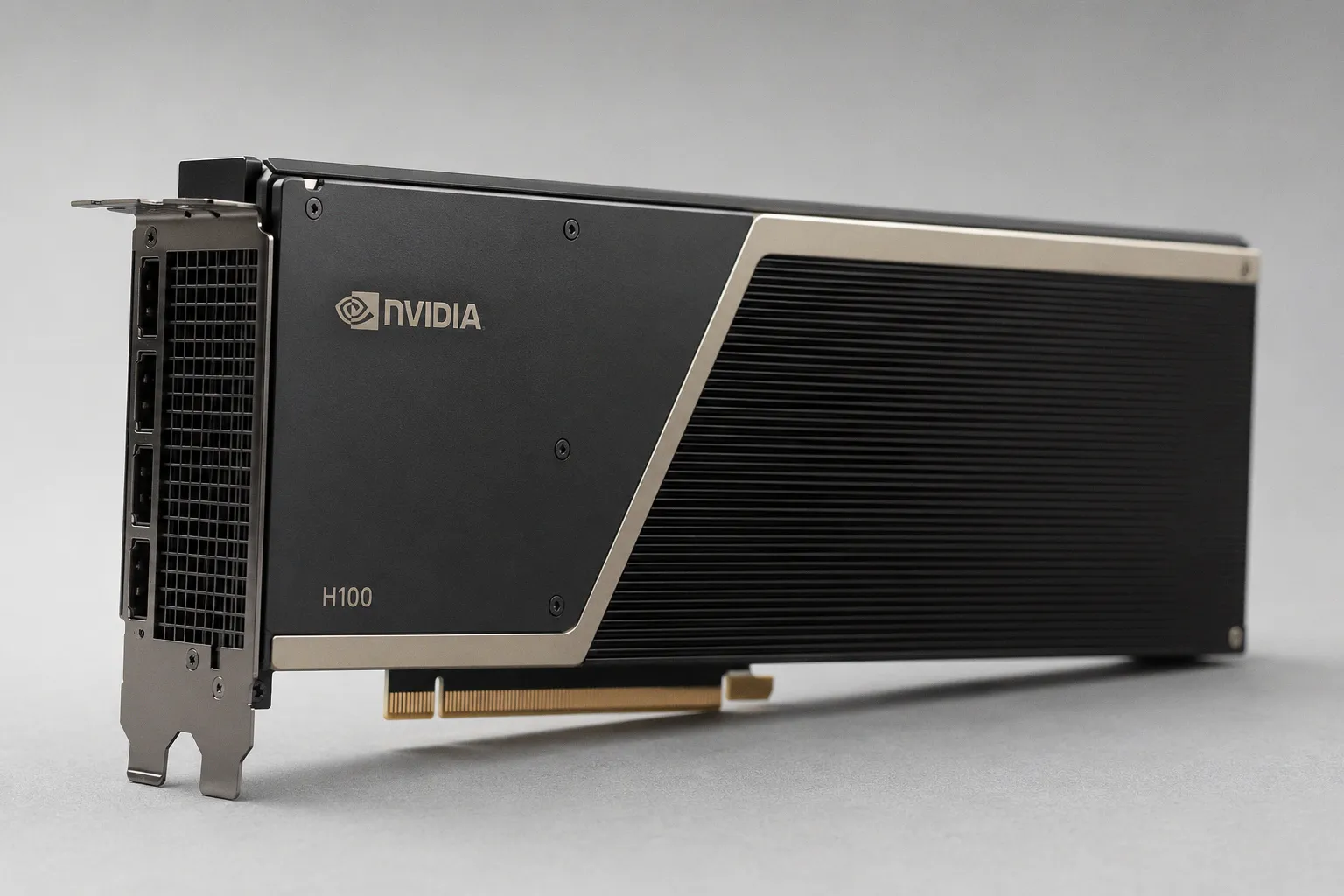
If you are trying to figure out how to check and compare H100 GPU cloud rental rates for AI workloads, you cannot rely on simple price-comparison search engines. The market is highly volatile, with hourly rates swinging anywhere from $1.50 to $4.50 per GPU. To keep your startup's runway from evaporating, you need to understand the underlying infrastructure differences, provisioning models, and hidden networking costs that define the current cloud GPU landscape.
---
The Economics of H100 Volatility: Why Rates Swing from $1.50 to $4.50
The pricing spread for NVIDIA H100 instances with 80GB of high-bandwidth memory (HBM3) is wider than almost any other commodity in the cloud ecosystem. At the lower end, around $1.50 to $2.00 per hour, you are looking at long-term commitments or highly unstable spot instances. At the upper end, towards $4.00 or $4.50 per hour, you pay the premium for on-demand flexibility from tier-one providers.
This volatility is driven by two main factors: capacity allocation and physical infrastructure overhead. Hyperscalers build massive, multi-tenant data centers with complex management software layers, passing those costs down to the user. Specialized GPU clouds, by contrast, focus purely on bare-metal or minimally virtualized access, allowing them to offer lower base rates. Furthermore, the physical configuration of the hardware matters enormously. A single PCIe H100 card is significantly cheaper to rent than an SXM5 module integrated into an HGX H100 board with 900 GB/s NVLink interconnects. If a provider offers a suspiciously cheap rate, you must verify the exact hardware interface and the inter-GPU bandwidth — a PCIe card plugged into a generic rack server delivers a fraction of the throughput you get from a purpose-built HGX chassis.
There is also a temporal dimension that most procurement guides ignore. H100 supply has been constrained since launch, but the bottleneck shifts quarter to quarter. During periods when hyperscalers are pre-allocating inventory for their own internal AI divisions or for mega-deals with foundation-model labs, the available pool for smaller renters shrinks and spot prices spike. When a new production batch hits the market or a large contract expires without renewal, prices dip. Tracking these cycles — even informally, by monitoring spot price APIs across two or three providers over a few weeks — gives you a sense of where the floor sits before you commit budget.
"If a provider's H100 rate looks too good to be true, the first question isn't about price — it's about which physical interface the GPU is running on."
---
Hyperscalers vs. Specialized GPU Clouds: Where the Real Savings Hide
When you compare H100 GPU cloud rental rates for AI startups, the biggest divide lies between the legacy hyperscalers (AWS, Google Cloud, Microsoft Azure) and the specialized GPU cloud providers (such as Lambda Labs, CoreWeave, and Vultr).
Hyperscalers offer unparalleled ecosystem integration. If your data pipeline is already sitting in an S3 bucket or Google Cloud Storage, spinning up compute within the same network minimizes egress fees and data latency. However, their onboarding process is notoriously high-friction. You will likely need to request a quota increase, wait days for approval, and navigate complex IAM policies before you can run a single command. Their on-demand rates reflect this enterprise overhead, frequently hovering near the $4.00 per hour mark.
Specialized GPU clouds strip away this operational bloat. They offer a developer-first UX, minimal onboarding friction, and direct SSH access to bare-metal nodes. Because their infrastructure is optimized specifically for high-performance computing (HPC) workloads — often utilizing direct liquid cooling and dedicated InfiniBand networking — they run highly efficient operations. This allows them to offer on-demand H100 rates closer to $2.00 per hour. The trade-off is a narrower ecosystem; you will have to manage your own storage replication and deal with fewer out-of-the-box developer tools.
| Provider Category | Avg. On-Demand Rate (per H100 80GB/hour) | Onboarding Friction | Best Suited For |
|---|---|---|---|
| Specialized GPU Clouds | $1.80 – $2.50 | Low (API-first, fast setup) | Rapid prototyping, model fine-tuning, independent research |
| Hyperscalers | $3.50 – $4.50 | High (Quota approvals, enterprise sales) | Large-scale enterprise pipelines, multi-cloud deployments |
| Decentralized/Spot Markets | $1.20 – $1.80 | Medium (Varying node reliability) | Non-time-sensitive batch processing, inference testing |
One nuance worth noting: the hyperscaler price premium is not purely margin. It includes managed networking, automatic failover, and compliance certifications (SOC 2, HIPAA, FedRAMP) that specialized providers may not carry. If your startup is building for regulated industries — healthcare, finance, government — the compliance overhead of assembling an equivalent audit trail from a bare-metal GPU cloud can exceed the per-hour savings. Run the math on your actual deployment context before assuming the cheaper option is cheaper overall.
"The premium you pay at a hyperscaler isn't for the silicon — it is for the privilege of not having to move your data out of their ecosystem."
---
Strategic Commitment: Calculating the ROI of 1-Year and 3-Year Reservations
For startups moving past the initial proof-of-concept phase, relying purely on on-demand availability is a recipe for budget exhaustion. This is where reserved instances become necessary. Committing to a 1-year or 3-year contract can slash your compute costs by 30% to 60% compared to on-demand pricing.
However, locking your startup into a long-term hardware contract carries massive structural risk. The AI hardware landscape is moving at breakneck speed. Committing to a three-year lease on H100s today means you will still be paying for them when next-generation architectures like Blackwell B200 are widely deployed and offer vastly superior performance-per-watt. The useful competitive lifespan of a GPU generation in AI training has compressed to roughly 18 months — signing a 36-month contract is a bet that your workload architecture will not shift in ways that make the older hardware a bottleneck.
Before committing significant capital to long-term hardware leases, smart founders ensure their engineering teams are fully prepared to maximize the efficiency of the silicon they are renting. Investing in your team's technical capabilities through specialized education and coursework is a critical pre-requisite; an unoptimized model running on a reserved cluster will still waste thousands of dollars, regardless of the discount rate you negotiated.
When evaluating a reservation contract, calculate your utilization threshold. The break-even math is straightforward but often ignored:
- 1-year reservation (typically 30–40% discount vs. on-demand): you need sustained utilization above roughly 60% of available hours to come out ahead. If your cluster sits idle for more than 40% of the month, the discount is wiped out by the hours you paid for but never used.
- 3-year reservation (typically 50–60% discount vs. on-demand): the utilization threshold drops to around 45–50%, but you are locked into hardware that may depreciate faster than your contract runs. The savings only materialize if you actually keep the same training workload on the same hardware for the full term.
A practical approach for most early-stage teams: start with a 1-year reservation on a single 8-GPU node for your primary training workload, and keep everything else on-demand. This limits downside risk while capturing the most meaningful discount on your heaviest-use resource.
---
The Hidden Risks of Preemptible Instances in Large-Scale Model Training
To save money, many developers turn to spot or preemptible H100 instances. These are spare capacity nodes offered at steep discounts, sometimes falling below $1.50 per hour. While the low price tag is highly tempting, using spot instances for large-scale training runs is often a false economy.
The core issue is preemption latency and checkpointing overhead. When the cloud provider experiences a surge in on-demand requests, your spot instance is terminated with very little notice — sometimes as short as 30 seconds. If you are training an LLM across an 8x H100 node, you have 640GB of active state sitting in VRAM. Writing that state to network storage before the instance shuts down requires immense storage write bandwidth. If your network storage is throttled, your checkpoint will fail, and you will lose hours of training progress.
The real danger is not a single preemption event — it is the cumulative cost of repeated interruptions. Each restart requires:
1. Re-provisioning the node — which can take minutes to hours depending on spot availability at that moment.
2. Reloading the dataset into local or cached storage — multi-terabyte datasets are not instant to rehydrate.
3. Rebuilding optimizer state — Adam and similar optimizers maintain per-parameter momentum buffers that must be restored from the last successful checkpoint.
4. Resuming from the last checkpoint — which means repeating any compute done between the last checkpoint save and the preemption event.
If your checkpointing interval is set to every 30 minutes (common for large distributed training), you can lose up to 30 minutes of GPU time per preemption. On a workload that would take 14 days on stable on-demand hardware, a single preemption per day on spot instances can stretch your timeline to 18–20 days — and you are paying for the re-provisioning and idle time during restarts. The constant cycle of restarting training runs, downloading datasets, and rebuilding cache structures can quickly make spot instances more expensive than paying for stable, on-demand compute. Save spot instances for batch inference, data preprocessing, or short evaluation runs — never for your primary training runs.
"Spot pricing is a discount on your patience, not on your compute. For long training runs, the hidden cost of interruptions often exceeds the savings on the hourly rate."
---
Navigating Confidential Enterprise Pricing and Inventory Scarcity
The public pricing tables listed on cloud provider websites only tell half the story. The AI chip supply chain remains highly constrained, and the best rates are almost always negotiated behind closed doors.
When you scale up to multi-node clusters — typically configured in 8x H100 HGX nodes — public pricing becomes irrelevant. Providers are highly motivated to fill large blocks of capacity and will offer customized enterprise contracts with aggressive discounts if you can demonstrate a consistent utilization plan. The mechanics are simple: a provider would rather sell 64 GPUs at a 40% discount to a single customer who will keep them busy 80% of the time than sell the same GPUs at on-demand rates to sporadic renters who leave them idle half the month.
When negotiating these private contracts, do not just look at the hourly rate per GPU. Pay close attention to the following infrastructure details:
* Interconnect Bandwidth: Ensure you are getting dedicated InfiniBand or high-speed RoCE (RDMA over Converged Ethernet) networking. Without this, your multi-node cluster will suffer from massive latency bottlenecks during the gradient synchronization phase. Ask for a network topology diagram — you want rail-optimized connectivity, not oversubscribed switches.
* Storage Throughput: Verify the read/write limits on the attached storage. High-performance GPUs will sit idle (starvation) if the storage system cannot feed data to the VRAM fast enough. For large-scale training, you need sustained sequential read speeds measured in GB/s, not IOPS benchmarks designed for database workloads.
* Egress Fees: If you plan to train on one cloud and run inference on another, check the cost of moving data out of the provider's network. Egress fees can easily double your monthly bill if you are not careful. Some specialized providers waive egress entirely as a competitive differentiator — factor this into your cost comparison.
* SLA and Preemption Guarantees: For reserved or enterprise instances, confirm that your contract explicitly excludes preemption. Some providers sell "reserved" capacity that still carries a preemption clause buried in the terms of service. Read the fine print.
One final point on scarcity: the H100 supply situation is not permanent. As NVIDIA ramps Blackwell production and hyperscalers begin migrating their internal workloads to next-generation silicon, a wave of H100 inventory will hit the secondary market. Startups that can afford to wait 6–12 months may find significantly better rates. If your research workload permits flexibility in timeline, deferring a large infrastructure commitment to the next supply cycle could save you more than any negotiated discount available today.