Order Blackwell B200 server racks for 2025 data centers
You’re staring at the marketing deck for NVIDIA’s Blackwell. Exaflops. 208 billion transistors. The promise of unbridled AI performance. The next click is on the procurement form.
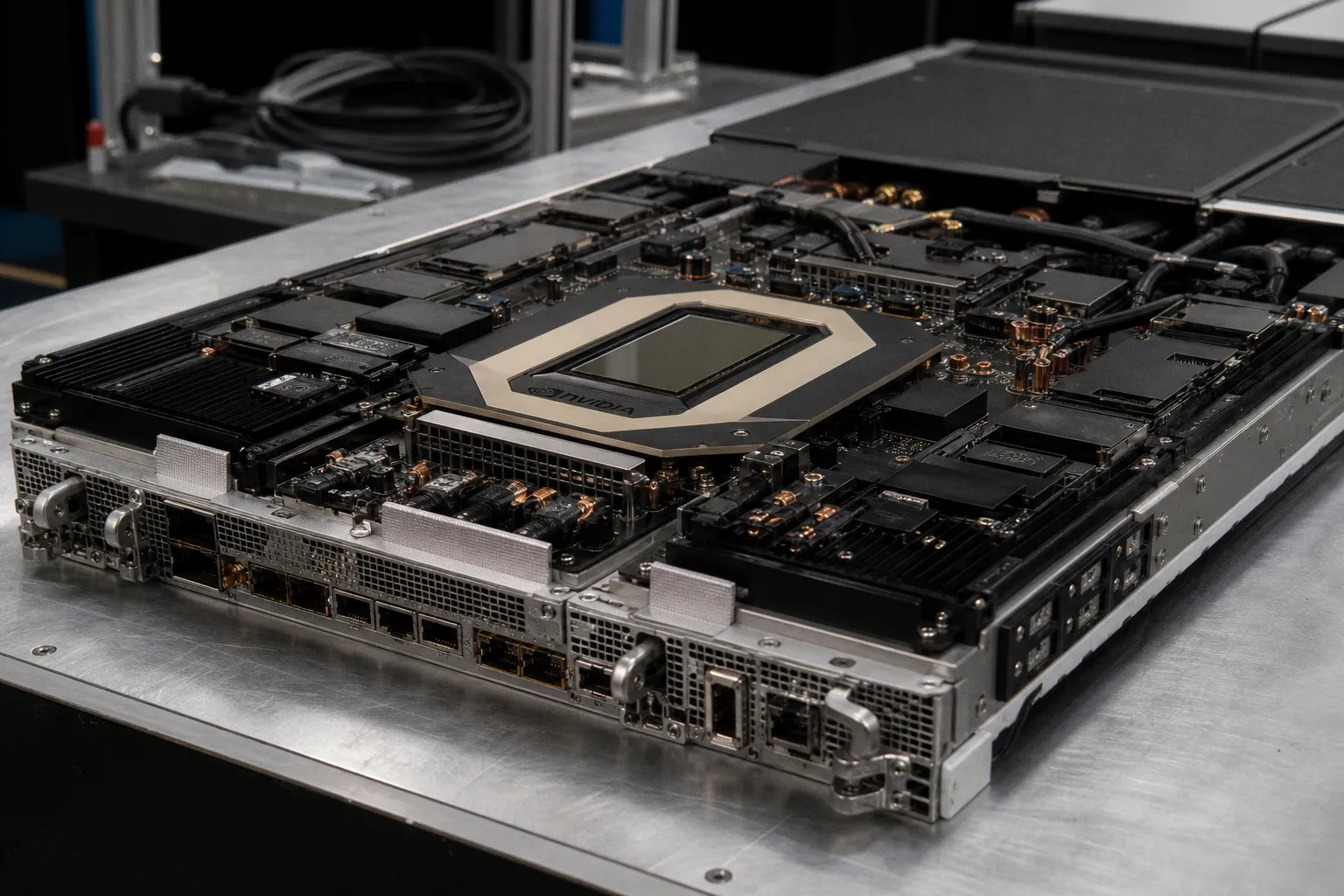
Order Blackwell B200 Server Racks for 2025 Data Centers? Let’s Talk Reality, Not Spec Sheets.
This isn’t a spec-sheet comparison. This is a ground-level report on what it actually takes to get a GB200 NVL72 system from a purchase order to processing workloads in your facility. Forget the ‘how to check’ tutorial. Here’s the blunt truth on navigating the bottleneck.
Navigating the 3.6 Million Unit Backlog and OEM Priority Tiers
Let’s be brutally honest: the Blackwell B200 backlog isn’t a waitlist; it’s a geopolitical event in silicon. With an estimated 3.6 million units claimed through mid-2026, the market is functionally sold out for new, non-priority orders. The question isn’t if you can buy one, but when your allocation might materialize based on your relationship tier.
The procurement path for 2025 is narrow and gatekept. The primary channels are the Elite members of NVIDIA’s Partner Network (NPN) and the major OEMs—think Supermicro, Dell, HPE—who secured massive allocations early. These partners aren’t just resellers; they’re your logistics and integration lifeline.
The brutal truth: you’re not buying a server. You’re buying a position in a 12-month queue and a liquid-cooling retrofit project.
For entities with established OEM relationships, lead times have compressed from a brutal 12–24 weeks to a still-demanding 8–16 weeks for priority SXM modules. But for the rest? You’re likely dealing with brokers and secondary markets where pricing volatility is extreme and verification is paramount. The onboarding process for even the most frictionless deal involves deep technical due diligence long before a dime changes hands.
Technical Readiness for the 140kW GB200 NVL72 Liquid-Cooled Architecture
Here’s the UI wrapper that burns procurement teams: the order form. It looks simple. But the technical checklist hidden behind that "submit" button is where 90% of projects stall. The GB200 NVL72 isn’t a server you slide into a rack. It’s a 120kW-140kW thermal beast that demands infrastructure most legacy data centers were never designed for.
Consider the core requirements:
* Power Density: A single rack consumes over ten times the power of a traditional 10-12kW rack. You need dedicated, high-amperage circuits at the rack level.
* Cooling Paradigm Shift: Air cooling is a fantasy here. These systems require direct-to-chip or immersion liquid cooling. Your facility’s existing HVAC is irrelevant; you need a dedicated coolant distribution unit (CDU) loop.
* Physical Footprint & Weight: The integrated rack-scale system, with its plumbing and coolant reservoirs, is heavier and has different servicing clearance needs than standard IT gear.
The hallucination rate on procurement teams is high when they assume a "power and cool" line item in the budget covers this. It doesn’t. This is a data center retrofit project masquerading as a hardware purchase.
Financial Modeling for Blackwell Deployments and SXM Module Pricing
Let’s talk latency—in your financial ROI models. The capital outlay is staggering, and pricing is anything but transparent. NVIDIA doesn’t publish an official MSRP for bare B200 GPUs, creating a shadow market.
Based on current market intelligence, here’s the breakdown:
| Component | Estimated Market Price | Key Consideration |
|---|---|---|
| Single B200 192GB SXM Module | $30,000 - $40,000 | Availability is the primary cost driver, not the chip itself. |
| Complete 8-GPU Server System | $500,000+ | Price skyrockets with memory, storage, and networking configs. |
| GB200 NVL72 Full Rack | Multi-million USD | Integrates 72 GPUs, liquid cooling, and NVLink fabric. |
The real cost isn't the silicon; it's the 12-month construction project for your data center's circulatory system to support it.
Your financial model must account for the 18-24 month build-out for supporting infrastructure. The total cost of ownership (TCO) for a single rack deployment can easily double the sticker price of the hardware itself when you factor in cooling CDUs, facility upgrades, and specialized networking for that 130 TB/s aggregate NVLink bandwidth.
Strategic Procurement through Elite NPN Partners and Major OEMs
If you’re serious about a 2025 deployment, your procurement strategy is your entire game. Going direct is not a viable path for the vast majority. You need to leverage the relationship network.
Here’s the actionable breakdown of procurement paths:
1. Major OEM Partnership (Dell, HPE, Supermicro): This is the most structured path. You engage with their enterprise sales team, who allocate from their pre-ordered stock. The advantage is integrated support and sometimes bundled financing. The downside is competing with their top-tier hyperscaler clients for priority.
2. Elite NPN Members: These are specialized AI infrastructure firms with deep NVIDIA relationships and allocation guarantees. They often provide more bespoke solutions and are more agile than giant OEMs, but may have less global support infrastructure.
3. Secondary Market/Brokers: For immediate (and astronomically priced) spot purchases. Extremely high risk. Requires rigorous verification of hardware provenance and warranty status. Not for the faint-hearted or those needing reliable, scalable deployment.
The key is initiating conversations now. The planning horizon for 2026 hardware (Vera Rubin) is already affecting 2025 allocations, as some orders shift forward. You need to be in the queue, with a technical spec sheet and a facility assessment in hand, yesterday.
Integration and Bandwidth Scaling for 192GB HBM3e Workloads
Finally, once the hardware arrives, the integration stress-test begins. The 192GB of HBM3e memory per GPU and the 8 TB/s bandwidth are useless if your data pipelines are a bottleneck. The NVL72’s 130 TB/s NVLink bandwidth is for intra-rack communication between the 72 GPUs—it’s a closed supercomputer loop.
Your system architects must think about:
* Networking: You need high-bandwidth (400G/800G) host networking to feed data into the rack and distribute results. Don’t let a 25GbE NIC become the choke point for a $5M system.
* Software Stack: Optimizing workloads for the Blackwell architecture and NVLink fabric isn’t automatic. Code that ran on Hopper may need significant tuning to avoid leaving performance on the table.
* Workload Characterization: Not every AI task requires a full NVL72 rack. Understanding if you need the raw FP4 exaflops of a full system or if multiple smaller HGX B200 servers would be more efficient and cost-effective is a critical pre-purchase analysis.
The deployment is a marathon. The procurement is just the first mile, and it’s currently uphill, in molasses, against a headwind. Your organization’s ability to handle the technical and financial onboarding determines whether this purchase is a breakthrough or a capital sinkhole.
The Verdict: Can you order Blackwell B200 racks for a 2025 data center? Technically, yes. Practically, it’s a brutal exercise in infrastructure triage, financial stamina, and supply-chain navigation. The payoff is access to transformative AI compute. The path is anything but frictionless. For many, the smarter, more immediate strategy is to prioritize the mental models for high-stakes decision-making required to navigate this process before a single PO is signed, and to explore every possible cloud-based Blackwell instance from providers like Nebius or Lambda in the interim. The on-prem dream is real, but the timeline is not what the brochure suggests.