AI chip maker SambaNova raises $1B at $11B valuation, 5 months after last mega round
$1 billion, led by General Atlantic, at an $11 billion valuation. That is the new marker SambaNova has put on the table, only about five months after its previous mega round.
The round prices a very different company than the Intel talks implied
SambaNova’s Series F is described as a first close, with more investors expected to join. Crunchbase News says the Palo Alto-based AI infrastructure and chip developer raised the money at an $11 billion post-money valuation, with General Atlantic leading and a long roster joining the round, including Battery Ventures, BlackRock, Capital Group, Intel Capital, Qatar Investment Authority, T. Rowe Price and Vista Equity Partners.
The number that matters is the spread. TechCrunch reports SambaNova had previously been in acquisition talks with Intel at roughly a $1.6 billion valuation, according to a Bloomberg report from December. Now the company is raising at $11 billion. That is not a tidy step-up. It is a full repricing of the cap table around the market’s current hunger for AI infrastructure assets.
SambaNova had also announced a $350 million Series E in February, alongside its SN50 chip. Crunchbase says the company has now raised nearly $2.5 billion to date. That is real capital intensity, not software-style venture theater. Chip companies do not scale on narrative alone. They consume cash, supply-chain attention and customer patience.
JPMorganChase gives the story an enterprise anchor
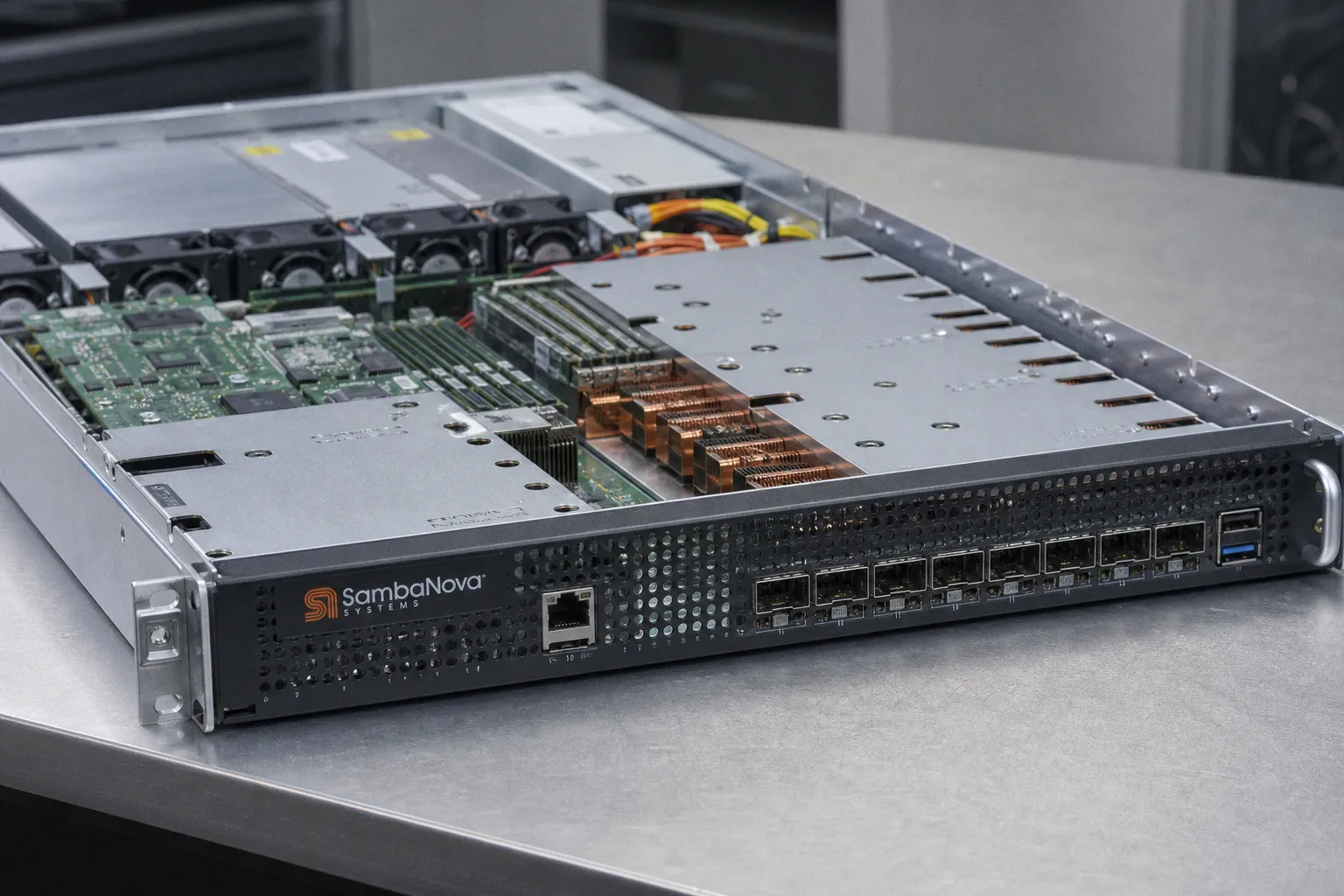
Alongside the financing, SambaNova said it has been selected by JPMorganChase as an inference-infrastructure partner. Its SN40L and SN50 systems are expected to support secure, on-premises AI inference at the bank.
That detail is more important than the usual funding-round choreography. Inference is where many AI infrastructure companies need to prove they can turn model enthusiasm into repeatable enterprise spend. SambaNova’s pitch, according to CEO Rodrigo Liang’s comments to TechCrunch, is that large banks do not want to depend entirely on cloud services and are looking for heterogeneous infrastructure.
The company’s positioning is clear: private, secure infrastructure for sensitive models, with demand from banks, enterprises, governments, sovereign clouds and neoclouds. That is a broad target map. It also means SambaNova must sell into slow, complex procurement cycles where technical claims meet budget committees.
The product timeline is still part of the risk. SambaNova launched SN40L in 2023, with cloud availability first and on-premises availability later that year. Its SN50 was unveiled in February 2026 and is due to begin shipping to customers in the second half of 2026, with SoftBank named as the first deployment partner. Until shipments and deployments compound, the valuation is underwriting execution ahead of proof.
Follow Intel, not the press release
Intel remains a useful thread to pull. It has backed SambaNova since the Series C and participated in the latest round. The two companies also have a multi-year partnership to support AI inference development based on Intel’s Xeon chip, and TechCrunch reports they now co-develop products and take them to market together.
That relationship cuts both ways. It gives SambaNova scale and distribution leverage it would struggle to build alone. It also keeps the strategic-exit question alive. Liang told TechCrunch the company keeps fielding interest and said the path may most likely lead to being public “at some point,” while leaving the door open in a dynamic market.
For investors, the practical read is simple. SambaNova has converted AI infrastructure scarcity into liquidity at a far higher multiple than recent acquisition talk suggested. For enterprise buyers, the question is narrower: whether its systems can deliver enough on-premises inference performance, security and operational control to justify adding another vendor to an already crowded AI stack.
The money is now in the bank, at least for the first close. The burden shifts to revenue, deployments and shipping discipline. At an $11 billion valuation, patience is expensive.